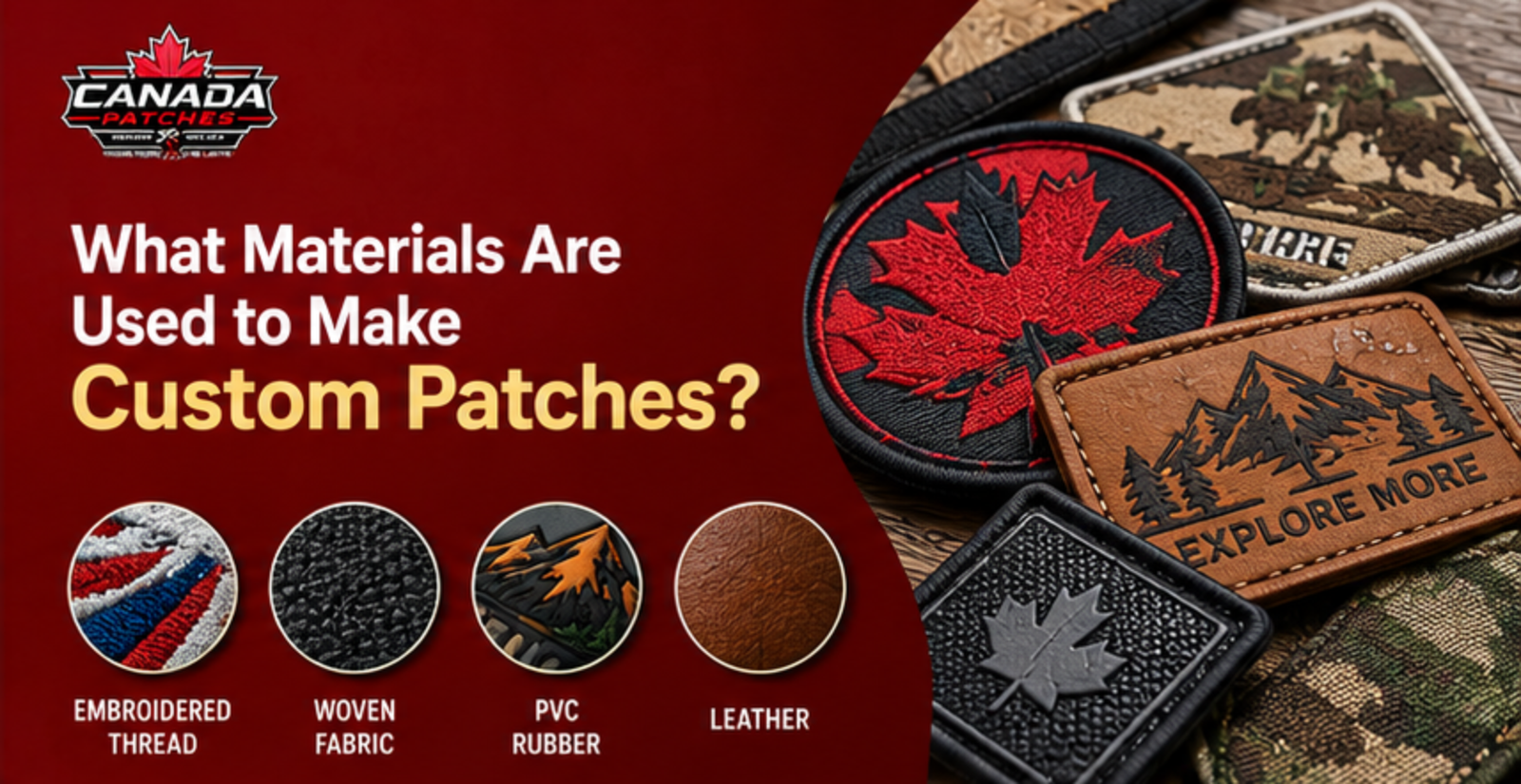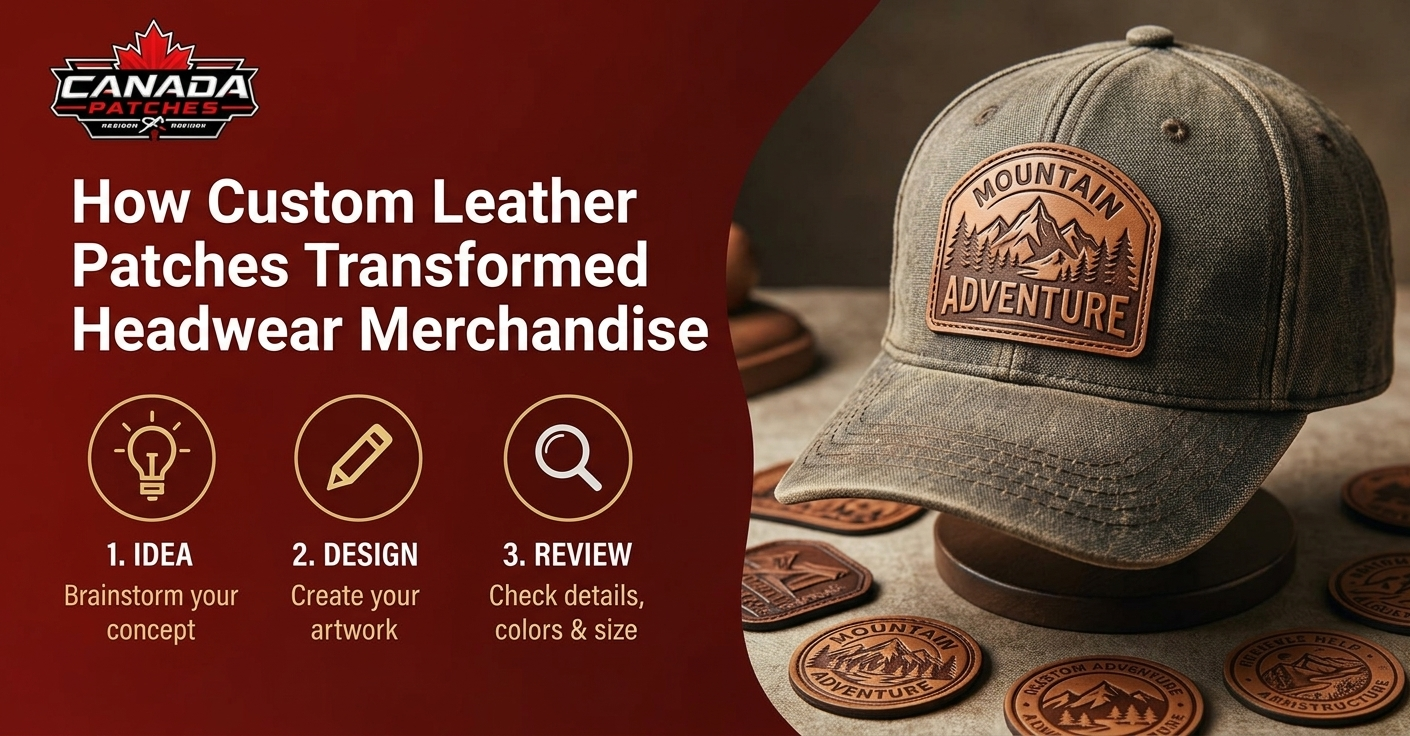
Hats have never been just a simple accessory used to protect oneself from heat and cold. For companies, sport teams, clubs, organizations, and designers, the hats can be turned into an excellent merchandise item. In light of the popularity of Canada custom patches, it became possible to make it even more unique by making it durable, thoughtful and specific to some particular brand. Nowadays there are many materials to create such accessories, but leather seems to be the most appropriate choice for this purpose as it allows to add to the hats premium image without making the design too complicated.
Custom leather patches are an evidence of the new perception of the branded headwear by the consumers. In contrast to using simple printings and embroideries, now it is possible for companies to use a tactile patch to create more vivid contact with the item.
Why did leather patches become such a strong alternative to traditional hat decoration?
Conventional embroidery still has its place, yet it may not be the optimal choice for each brand identity.
Delicate embroidered artwork may sometimes turn out too decorative, and printed graphics may fail to possess the tangible feel that some customers of merchandising expect.
Another design approach is leather.
A leather patch always provides for a more sophisticated visual image.
Its surface is capable of hosting a logo, wordmark, emblem, coordinates, initials, or other distinctive elements in a relatively uncluttered manner.
This aspect is very important due to the increasing competition in contemporary market conditions.
A leather patch helps to emphasize that any cap was not created as mass-produced, but it was carefully crafted.
For companies specializing in high-end merchandising, such subtle difference may play a vital role in perception of a particular item by their potential clients.
What makes leather patches for hats work so well with modern branding?
One of the reasons why leather patches for hats are popular, is their versatility. A leather patch can allow for different directions visually without necessitating the redesign of the entire hat.
Outdoors brands can opt for sturdy fonts along with mountain or compass motifs. Breweries and restaurants have the possibility to work with already existing logos and make them tactile. Construction companies, workshops, car businesses, and local companies can use bold fonts that can be recognized from a distance.
Another thing that makes leather an especially good material for patches is that leather is a very durable material.
This becomes especially relevant for hats since it is one of the most prominent accessories that people wear every day. Hats are used during sports events, festivals, work, outside activities, vacations, and casual hangouts. Thus, a patch on a hat allows a company to get constant visibility without promoting the brand actively.
How did leather patch caps change the perception of promotional merchandise?
But perhaps the greatest change is that of the move away from items of merchandise that are designed solely for their promotional value.
Promotional baseball caps are typically created with the aim of having the most visible logo possible. But a leather patch cap may instead seek to incorporate the logo into a stylish design.
This difference is key.
If people can see themselves wanting to wear the item, the message of the brand is more genuine. People are not just wearing an advertisement. They are wearing a product with its own style.
And this has enabled leather patch caps to move beyond corporate giveaways into retail lines, limited editions, event wear, sports items, and lifestyle merchandise.
For the brands, this means the chance to consider merchandise as products in their own right.
Why are branded headwear patches becoming part of the product experience?
A merchandise piece must convey more than the name of the company. It should tell about the brand.
Branded headwear Patches on caps may be able to achieve that goal since the patch will be very visible but will leave plenty of room for creativity. Such things as shape, lettering, texture, border, color and leather will go into it.
Think of an imaginary outdoor company based on exploring. The company’s cap could have a small leather patch that would show an image of a mountain range and coordinates instead of the big corporate logo. Such design would reflect the character of the company and be wearable even without using it for the business.
This is what separates branding from the product identity.
It is true for any other club, sport organization, motorcyclists, hospitality business, trade, creators, and local brands. Patches turn out to be a miniature story-telling medium.
What should brands consider before turning a logo into a leather patch?
Not all logos can be directly turned into patches.
Logos designed for use on website headers can have fine lines, small texts, gradient designs, or colors that make reproduction at miniature size problematic. Before starting the process of making the patches, companies need to take into account how their logo will look as a patch.
The most effective designs usually have:
Clear lettering
Strong visual contrast
Recognizable shapes
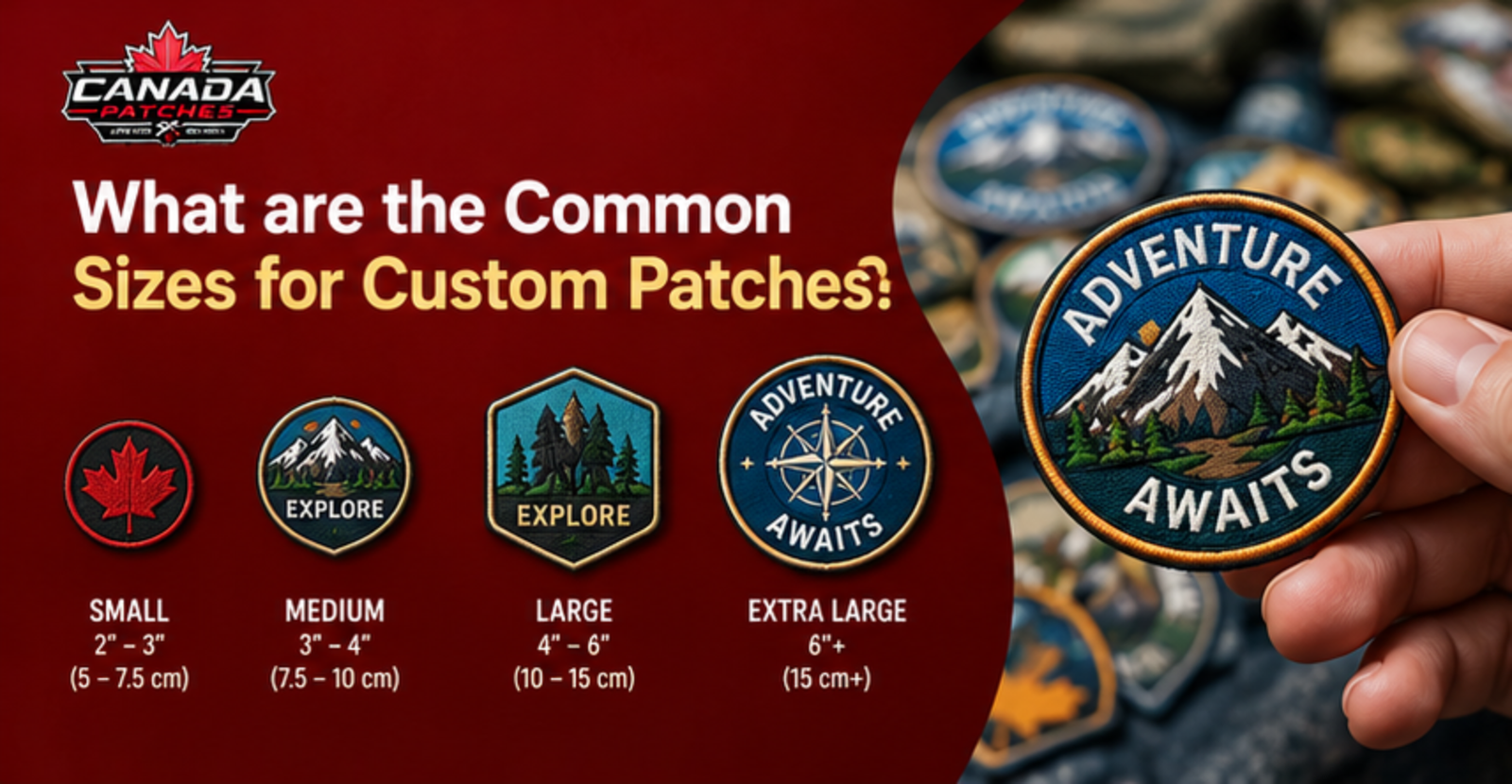
Appropriate patch dimensions
Simplified details where necessary
A border that supports the design
Artwork supplied at a suitable quality
It would be prudent to take into account where the patch is positioned on the cap. The most obvious choice is a front panel, but the available surface space depends on the design of the cap.
What looks perfectly well-balanced on a two-dimensional computer screen might need tweaking for three-dimensional application on a front panel.
How do custom leather patches create a more premium merchandise look?
Custom leather patches add elegance to even the simpler headwear due to the added texture and dimension without the need for a highly sophisticated graphic design.
One such method is the debossing process.
Debossed leather patches involve creating an impression on the leather patch. It allows logos and text to be made through depth alone and not the use of any printed colors. The effect may be elegant and understated, which may be perfect for those seeking a premium or heritage look.
The beauty of debossing is partly due to restraint. A highly intricate logo does not have to be full of bright colors to stand out. Sometimes, the material and its design may make up for a lot of the needed elements.
As such, debossed leather patches may work well for minimalist brands, outdoor wear, premium workwear, and hats with a classic design.
When should a business choose custom hat patches instead of direct embroidery?
The decision depends upon what kind of look the brand wants to have, its artwork, budget, and purpose.
Embroidery directly on the hats is a perfect idea if the artwork requires stitching of letters or when the traditional style of embroidery plays an important role in the brand identity. In contrast, patches allow the separation of the artwork from the cap.
This allows the use of custom hat patches Canada to become helpful for companies that need to ensure consistency in their branding through different types of headwear. The same patch design could be easily adapted to different colors and constructions of the caps while keeping the same branding.
In addition, patches may help to create the collection of products where the brand identity remains the same in all designs.
Why are custom patches useful for limited-edition and event merchandise?
Limited-edition products rely on the exclusivity factor greatly.
The use of patches helps convey that message since the physical process of creation makes the item look like it was created specially and not just digitally replicated. An enterprise may make a custom patch for an anniversary, festival, tournament, product release, seasonal promotion, or any community event.
For instance, an enterprise celebrating ten years of work may come up with a number or date-specific leather patch and apply it to a limited edition of caps. Thus, the merchandise is tied to a certain time period.
It also suits organizations and clubs. An annual event can have a unique patch but still keep the branding elements common to the larger brand.
The hat turns into merchandise as well as memorabilia.
How can Canada custom patches help local brands build recognizable headwear?
Merchandise can be used for such purposes as transforming recognition into something tangible by local companies.
Canada custom patches can help achieve this goal since they provide local companies with the consistent design elements that can be used on various types of merchandise, including caps, jackets, bags, uniforms, and others. Patches may help promote brand identity regardless of the fact that product is sold in different locations.
Local identity may also be integrated into design through the usage of regional symbols, landmarks, geographical references, slogans, and specific images related to the particular community.
It should be noted that it is important to avoid using designs that try to say too much. In most cases, successful patches contain only one message that is clearly visible in actual size.
What mistakes can make a leather patch look less professional?
However, poor choice in terms of the patch’s design cannot be compensated by the patch material.
A frequently made mistake is the choice of artwork with too many details. It may become unclear when it is resized to the patch.
Another mistake is improper choice of dimensions without taking into account the dimensions of the front part of the cap. A large patch will dominate on the cap, while the small patch will lack any visual impact.
Lack of proper contrast is another reason for poor readability of patches. Even the most beautiful logo requires contrast between its elements and background.
Finally, brands should not treat patches as separate graphics without taking into account other elements.
Where is the future of leather-patch headwear merchandise heading?
The continued appeal of custom leather patches points toward a broader shift in merchandise: consumers increasingly value products that feel intentional, durable, and connected to a particular identity.
The reason headwear works so well in this context is that caps provide a small yet highly visible surface area. A good design can transform any cap into a merchandising tool without overpowering the wearer.
What is more, for companies, the possibilities extend beyond placing their logo on the cap. The best headwear collections use patches to convey character, quality, community, and mission.
As customization becomes more accessible, Canada custom patches are likely to remain relevant for businesses and organizations looking to create headwear that feels more distinctive than conventional promotional products. Leather brings another advantage to that trend: its tactile character can make a familiar logo feel like part of the physical product.
Ultimately, the transformation is not really about replacing embroidery or printed branding. It is about giving brands another way to make merchandise meaningful. When the material, artwork, placement, and message are considered together, a simple cap can become a product people actually want to wear, keep, and associate with the brand behind it.