A custom patch may look like a simple piece of decorated fabric, but its performance depends on several carefully selected components. The base material, thread, surface finish, border, adhesive and backing all influence how the patch looks, feels and survives daily use. Understanding the maerials to make custom patches helps buyers avoid blurred lettering, frayed edges, poor adhesion and colours that fade before the garment itself wears out.
When ordering custom made patches Canada buyers should also consider where the finished item will be used. A patch designed for an indoor staff uniform faces different conditions from one attached to a winter jacket, hockey bag, work vest or outdoor club garment. Canadian rain, snow, road salt, temperature changes and repeated laundering can expose weaknesses in materials that initially appear suitable.
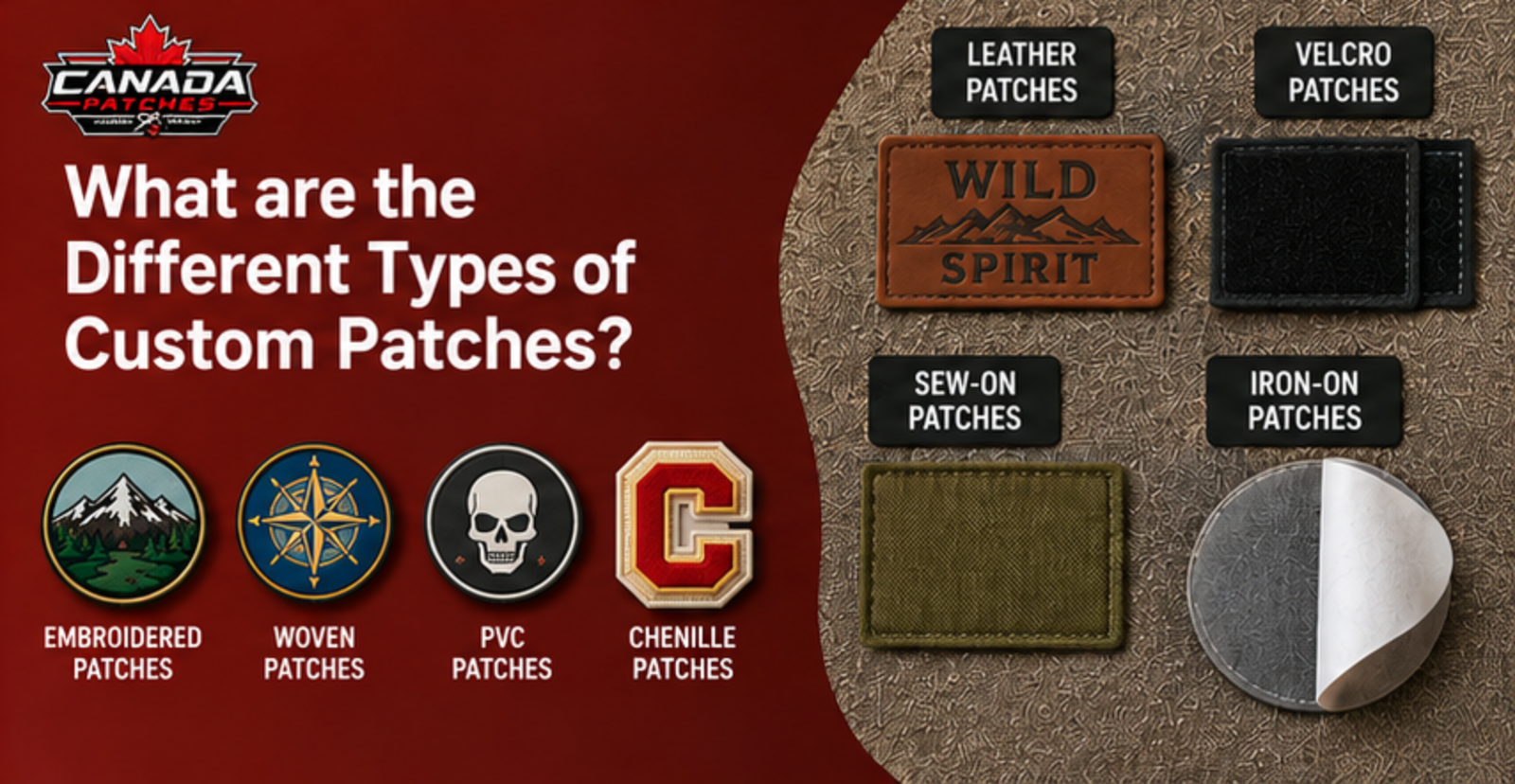
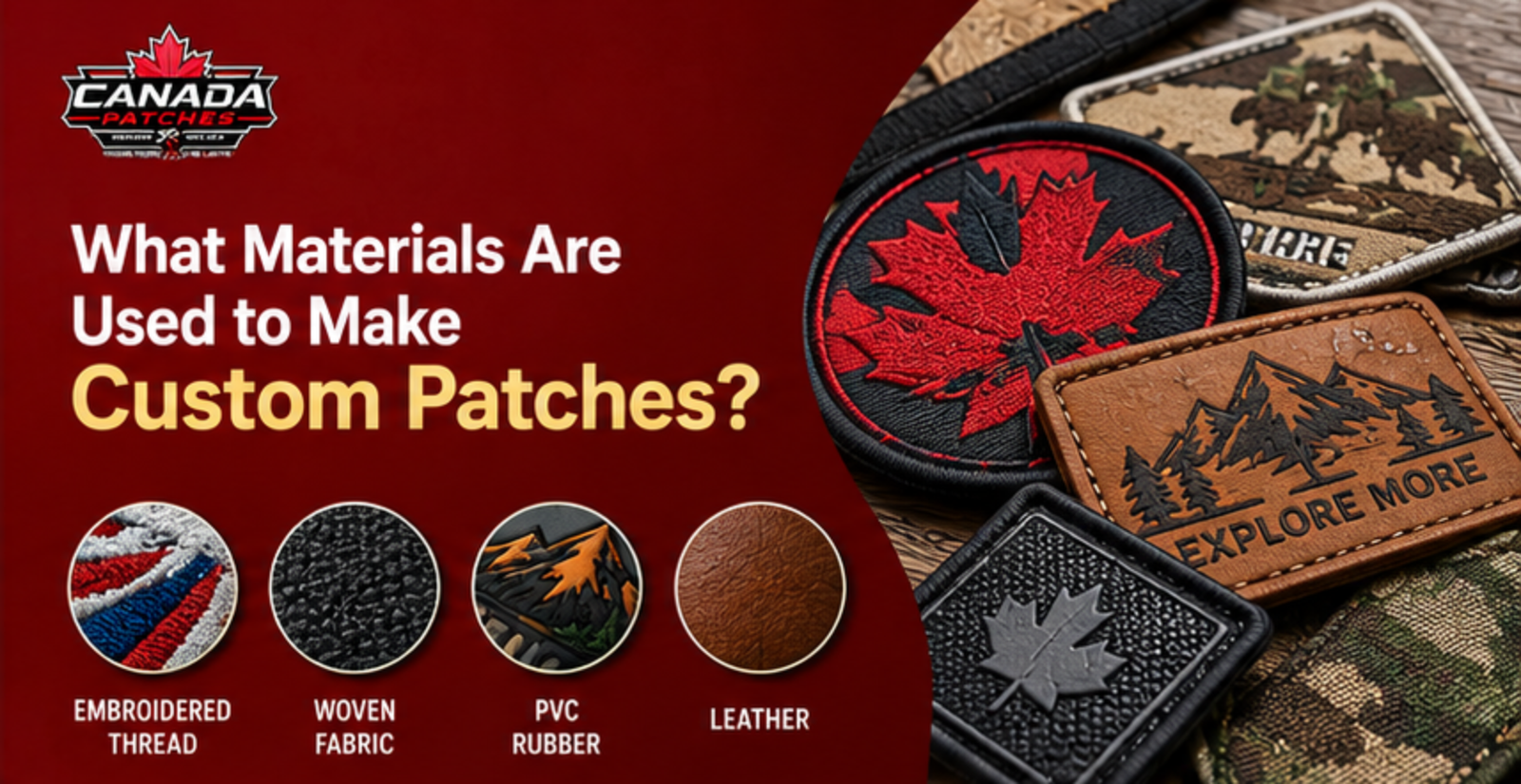
No one material will work for all patches. Twill works well for an embroidered patch, woven material works for intricate designs, plastic vinyl can be used to repel water, chenille gives the effect of a varsity patch, and printed polyethylene polyester works for photorealistic images. The key to choosing the right material starts with the design, but there are other considerations as well.
Why Does the Patch Base Matter More Than Most Buyers Expect?
The base serves as the structural element of the design. It is responsible for the feel of the patch – whether it is soft, firm, flexible, heavy or waterproof. The base is responsible for the visibility of the thread, ink and molded details.
One of the most popular base materials used for embroidery patches is polyester twill. The diagonal structure of the fabric provides the necessary stiffness while not making the patch too thick. The variety of colors available for twill allows an uncovered area of the base material to become a part of the design and reduces the number of stitches applied.
Felt is softer and heavier than twill. It is often associated with school crest patches, heritage badge patches and varsity designs. However, due to its slightly fuzzy texture, it is not the best choice for artworks containing very sharp lines or for patches which will be worn under wet conditions.
Canvas is even tougher than felt. It is suitable for work clothing patches, equipment patches and any other designs requiring durability. However, due to the visible texture of the canvas, the artwork may need to be redesigned before the manufacturing process.
Which Materials to Make Custom Patches Produce the Clearest Detail?
The best materials to make custom patches depend partly on the size and complexity of the artwork. Embroidery is effective for bold shapes, solid lettering and recognizable logos. Woven fabric is usually more appropriate when the design includes thinner lines, smaller text, narrow borders or complex facial details.
The embroidered patch is made of coloured threads sewn into a fabric substrate. The threads lie on top of the surface and form a three-dimensional effect. This three-dimensional effect is a major feature of the embroidery process, but it restricts its precision. Small openings can close up, narrow letters can blend into each other and delicate color transitions need to be transformed into blocks of solid colors.
The woven patch is made of thin threads woven to create both the substrate and the image. This allows it to display details more precisely within a smaller space. It works well for small brand logos, detailed graphics and text-heavy patches. However, a flat woven patch does not have the raised effect of an embroidery patch.
The decision should therefore be based on the artwork rather than the assumption that one construction method is universally superior. A bold three-colour emblem may benefit from embroidery, while a detailed landscape or small signature may reproduce more accurately as a woven patch.
How Do Thread Types Change a Patch’s Texture, Colour and Lifespan?
Polyester embroidery thread is highly sought after due to its durability, color fastness and moisture resistance properties. Polyester is a good choice when it comes to sewing uniforms, sports gear, bags and clothes that will undergo frequent washing as it holds its shape well and comes in many colors.
Rayon embroidery thread is smoother and shinier than polyester one. It can enhance ceremonial badges, decorative patches, or presentation embroidery and create a luxurious look for the clothing items. Nevertheless, polyester is always the more suitable thread for demanding situations as it tends to handle abrasions and frequent washing better.
Metallic embroidery thread adds reflective golden, silver or colored effects. It will add some shine to certain areas such as borders, initials, or other elements of the design; however, it should not cover large areas as metallic thread could become rigid, hard to sew and too dominant against other colors.
Glow-in-the-dark and reflective threads have some functional features: the former thread accumulates light and emits it later in the dark, while the latter one reflects light back from its source and makes things more visible in direct light conditions. These threads cannot always replace the high-visibility materials.
When Is Soft PVC Better Than Fabric for Outdoor Patch Use?
Flexible, rubberlike soft PVC is used to mold waterproof patches. Rather than sewing a pattern onto cloth, the pattern is molded on colored plastic material in protruding and recessed parts, which results in strong edges, good control of depth, and a non-absorbent surface, which will neither soak up water nor melting snow.
PVC is especially applicable in producing clothes, camp equipment, tactical bags, fishing equipment, etc., because it will neither absorb water nor dirt. Usually mud sticks less on the nonporous surface of PVC than on the heavily embroidered thread surface. Also, it does not have those loose fibers that may develop after a fabric patch wears out due to abrasion.
It may not be suitable for all designs. The finest tonal and photographic shading will be hard to achieve using moulding of the colours together. A thick PVC patch may also be heavier and less breathable than a woven or embroidered patch. Clean shapes, proper layering and good spacing of tiny pieces should be taken into account.
Use of the patch in cold weather requires special attention. The right kind of the PVC patch composition and its right thickness should be selected so that the patch is not stiff but flexible enough. A thin design will fit better when attaching it to a jacket or other curved garments.
Can Printed Polyester Reproduce Details That Thread Cannot?
Printed polyester will usually do the trick when there are photographs, watercoloring, smooth color blends, shadows, or numerous colors in the design. The design is printed on a smooth fabric surface, meaning that all of the visual information can be copied without having to turn everything into stitches.
This technique has the advantage of being able to capture delicate color changes and small details which embroidery might flatten out. This is typically done for commemorative, illustrated art, events, and promotional designs where exactness is needed.
At this stage, buyers often compare printed options with custom name patches for uniforms, luggage, work shirts and identification garments. A printed surface can accommodate small role descriptions or complex branding, while embroidery remains effective for a larger name presented in clear, bold lettering. The correct choice depends on viewing distance, font size and how frequently the patch will be handled or washed.
Image quality is critical. A low-resolution file does not become sharper simply because it is printed onto fabric. Artwork should be supplied at the intended dimensions, with readable text and colours assessed against the chosen base. Important content also needs adequate space from the edge so it is not crowded by the border.
Why Do Chenille Patches Need a Different Material Structure?
Chenille patches can be identified by their soft, raised loops as well as their traditional varsity style. Chenille patches are made by using a fluffy chenille thread instead of making a smooth surface of densely stitched patches.
Felt serves well as a base under chenille since it holds the yarn up and complements its look. Other decorations such as embroidery may be used to outline and make smaller letters. This combination helps create a design that includes a softer middle area along with stitch details.
Chenille works best for large designs. It tends to hide very small text, thin gaps, and fine line work. Chenille works well for jackets' initials, school letters, team numbers, and mascots, but not miniature logos.
It is important to take into account how the design will be cleaned. Lint tends to stick to raised loops and may damage the design when washing harshly. Proper placement and cleaning instructions are essential.
.Are Leather and Faux Leather Suitable for Modern Patch Designs?
Leather patches provide a unique option for designs that do not use brightly-coloured threads. Leather gains its own character with age, and is often used in denim, aprons, caps, fancy bags, and hand-crafted products. A logo could be debossed, embossed, engraved or printed on leather.
Faux leather will look more uniform and is chosen when leather would not be the best choice. Faux leather comes in different colors and finishes, and can have a smooth, minimal finish or even look like real leather.
Both materials are especially suited for restrained branding. A one-colored engraved logo looks more refined than a multi-colored one. But too small a stroke might become illegible after engraving, and the patch should have adequate thickness for the garment material flexibility.
Cleaning is important. Not all leather-like materials withstand high washing temperatures or tumble-drying. In such cases, a detachable fastening system might be used.
Which Backing Prevents a Good Patch from Failing After Application?
While the face is appealing, it is the back that determines the manner of attachment and its efficiency. A choice of the backing regardless of the nature of the fabric may cause such undesirable results as corner lifting, damage to the fabric or inability to remove the patch when necessary.
Sewing-on backing offers the best way of attachment as it is more durable than any other method. The sewing of the perimeter provides mechanical connection suitable for various types of jackets, uniforms, jeans and bags. This type of backing is very useful for the attachment of heavy or highly-used and washed garments.
Iron-on backing involves the use of heat-sensitive glue. Ironing provides neat attachment on the fabrics which will tolerate the necessary heat and pressure. Such kind of backing may not be suitable for waterproof coating, delicate synthetic, highly elastic fabrics and clothes susceptible to burning. Even if the iron-on patch is applied correctly, the addition of stitches to the perimeter may enhance its durability.
Hook and loop backing enables the patch to be detached, relocated, or replaced. It comes handy when you require different identification of the patches according to tactical equipment, work function, clubs, and collecting. Loop side requires being stitched to the article securely.
Adhesive backing is basically meant for temporary application, special events, and before stitching. It does not necessarily imply that it is the permanent washable backing for the patch. Another option includes magnetic and pin backing where alteration of the fabric underneath is undesirable.
How Can Buyers Match Materials to Climate, Garment and End Use?
A reliable specification starts with the question, “What must this patch survive?” Appearance is important, but the wrong construction can fail even when the artwork has been reproduced perfectly. The materials to make custom patches should be selected after considering moisture, friction, UV exposure, washing frequency and movement.
Consider the issue of patch size along with the issue of materials. A patch design that works well at 100 mm does not necessarily work at 50 mm. Rather than squeezing all the details into the smaller patch, strip away the secondary text, bolden the thin lines, and add more white space.
Construction of the border also makes a difference. Merrowing results in a classic raised edge but tends to work only with simple silhouettes. A laser or heat cut provides room for custom-shaped borders and finer detailing. Border color should contrast with the image but still set the image apart from the garment.
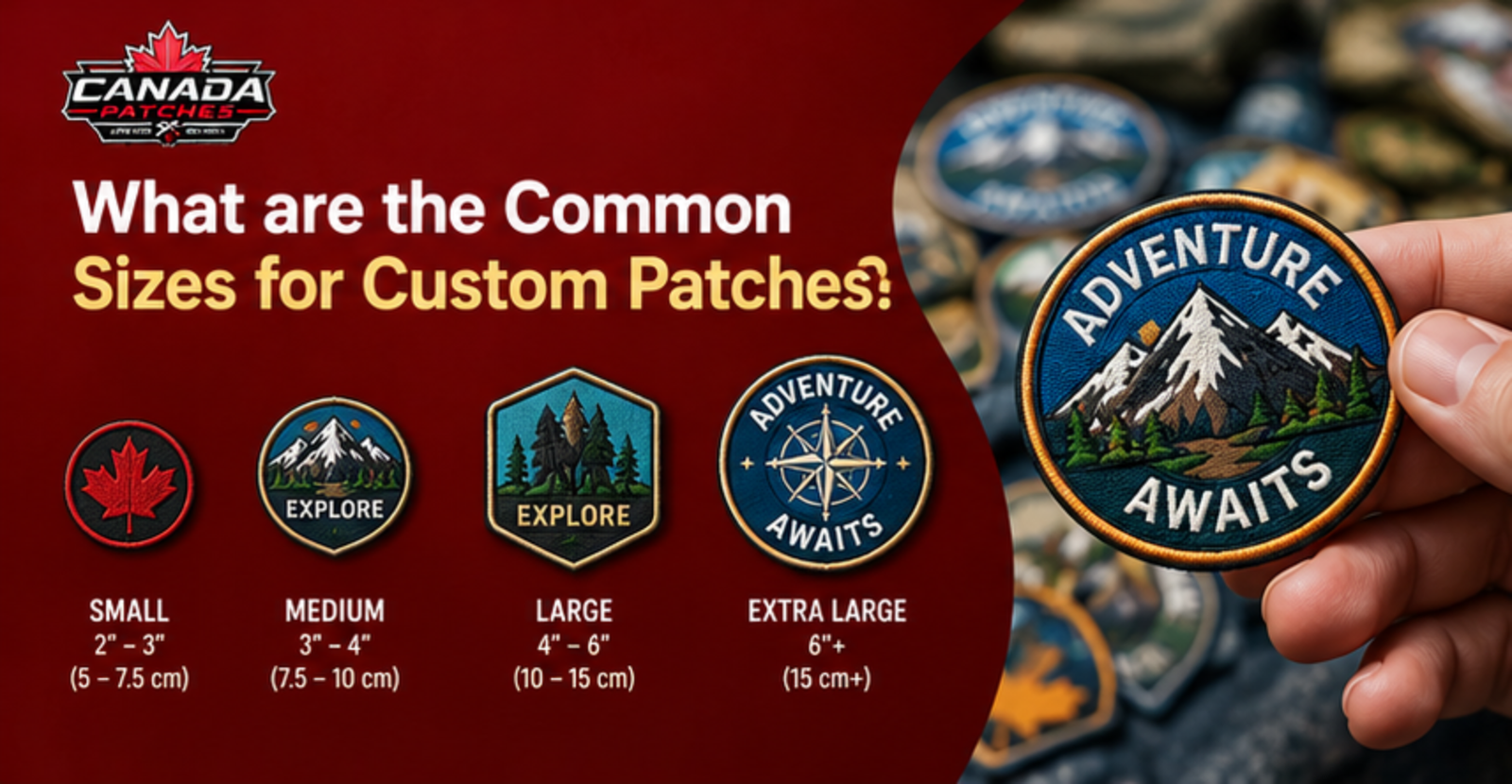
A mock-up or a proof helps to verify dimensions, color placement, border type, backer, and orientation. Proofs are most valuable when viewed at actual size and not blown up on the computer. Consumers need to pay particular attention to small text, tight spaces, and adjacent color contrast.
What Final Material Checks Prevent Expensive Ordering Mistakes?
Prior to production approval, check how the patch will be worn, attached, and cleaned. Find out if it has to curve around a sleeve, stay flat on a hat, withstand outdoor moisture, or stand up to rough industrial laundry. These specific conditions make far more sense than just looking at the patch.
The artwork and the production process have to go well together. Embroidery requires a wide enough stroke; weaving demands clearly separated colors; PVC requires proper levels of mold; print needs sufficient resolution of the picture; and chenille needs bold shapes. The most successful outcome will come from adjusting the artwork for the process and not vice versa.
Color requirements also have to be practical. The thread, PVC, ink, felt, and leather react differently to light, and the same color value in a computer is not necessarily going to look alike on different materials.
Ultimately, the best maerials to make custom patches are the ones that support both the design and its real working environment. Embroidered twill offers classic texture, woven construction improves fine detail, printed polyester handles complex imagery, PVC performs well in wet conditions, chenille adds bold dimension, and leather creates a restrained premium look. When the face material, edge and backing are specified as one complete system, the finished patch is more likely to remain attractive, readable and secure throughout its intended life.