Customized patches are specially crafted pieces of fabric, vinyl, leather, printed, woven or embroidery items meant to depict a unique logo, name, image, message, art work, etc. Custom patches differ from conventional patches because the latter is tailor-made according to some specific requirements that include size, color, materials, etc. Patches are often affixed to clothing or uniforms but may be stitched on other fabric articles too.
For someone ordering custom patches Canada, the choices can initially seem more complicated than expected. Should the design be embroidered or woven? Does PVC work better outdoors? Is an iron-on backing suitable for a work uniform? Understanding how patches are made and where different types work best makes these decisions much easier.
Patches are applied to fashion, businesses, schools, sports clubs, military-inspired clothes, motorcycle gangs, events, organizations, and personal projects. The effectiveness of patches stems from their simple strength in that they transform an ordinary product into something recognizable, decorative, or promotional without having to redesign the whole product.
1. How Do Custom Patches Solve the Problem of Adding Identity Without Replacing Clothing?
It can be very impractical to print or manufacture a totally new set of clothing each time there is a change in the logo, role, team, or message. A patch is another branding or identifying component that can be affixed to already made clothes.
Thus, patches can serve companies that need uniforms with employee identification; sports teams that may require club badges; and educational institutions with house/society badges. It can also be a way of customizing one’s own jacket or backpack.
The same concept can also apply to promotional goods where an ordinary hat or bag can be branded with the help of a professionally designed patch. Some types of patches, depending on the type of backing used, can even be peeled off or transferred. This makes them more practical since the original clothes may still be usable.
Thus, the function goes beyond beautification because a patch can convey identity instantly and make the original garment uncomplicated.
2. Which Custom Patch Type Works Best When a Design Has Fine Details?
Every design does not need to be made using the same manufacturing process. One of the most crucial considerations in choosing the type of patch depends on how detailed the art is.
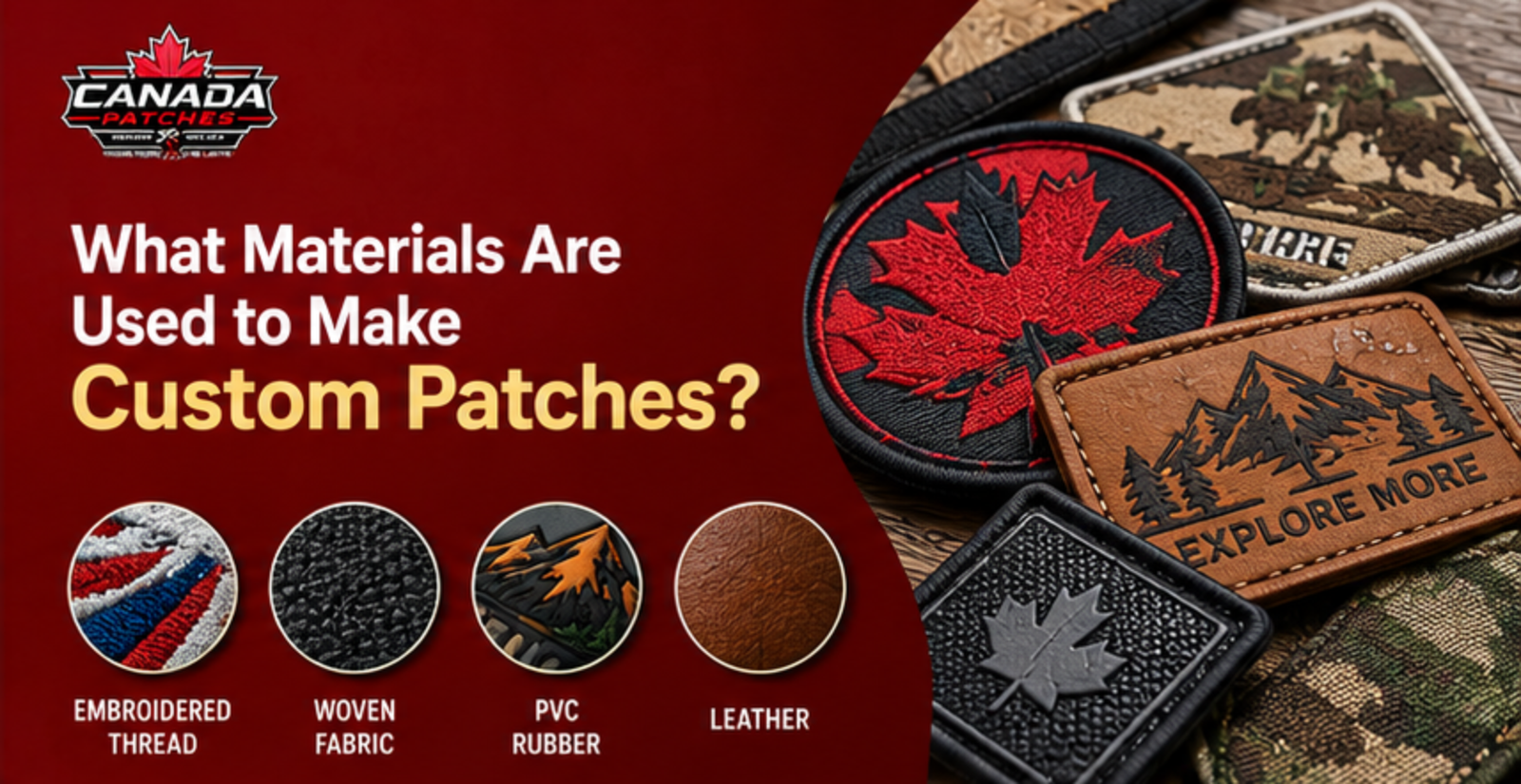
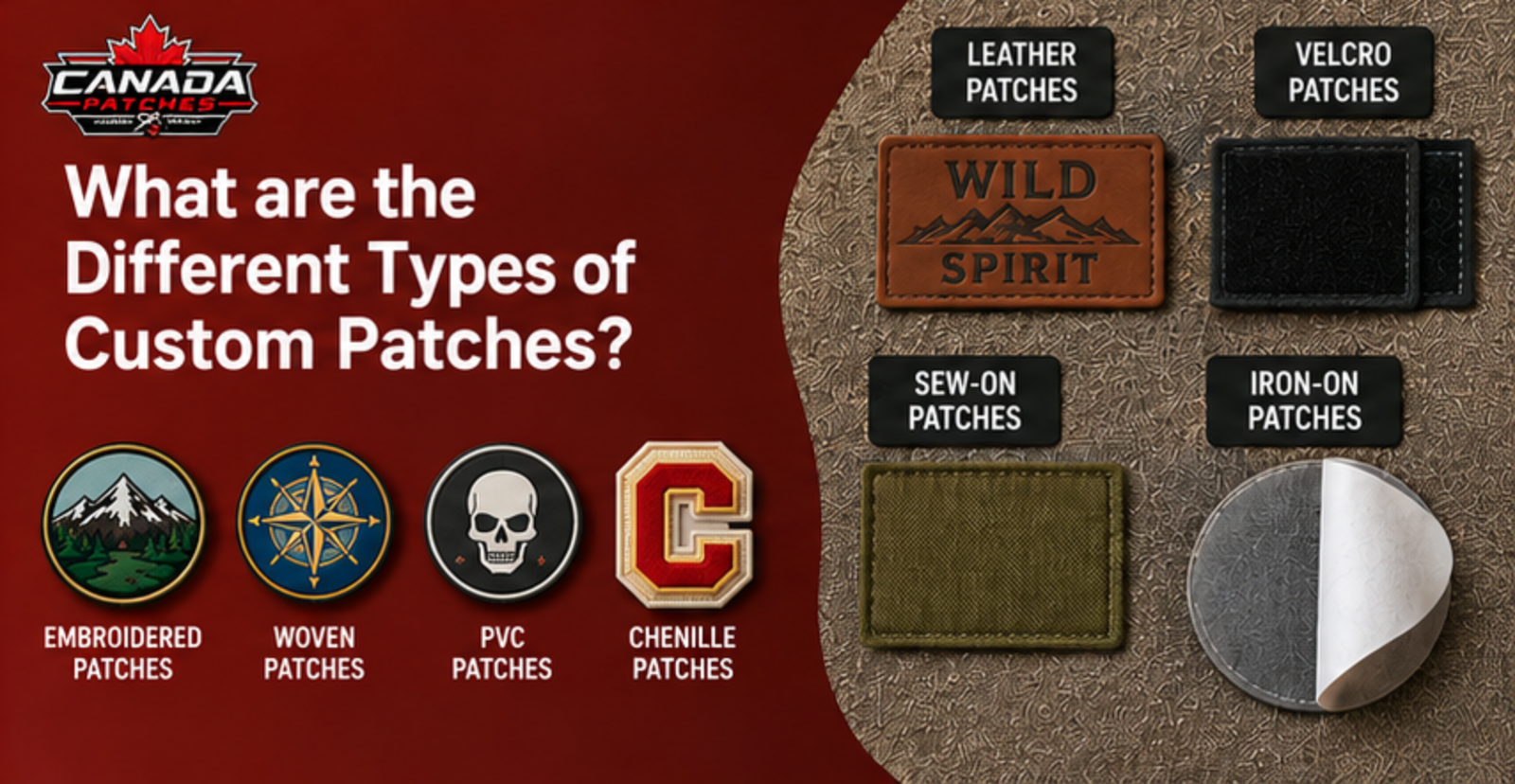
Embroidered patches are identified with their dimensional texture and classic look. They are highly effective for logos, letterings, symbols, and artworks that have definite shapes. It is one reason why they continue to be the top choice for uniforms, clubs, work apparel, and traditional designs.
Woven patches are thinner because of the thinner threads and tighter weaving used in the process. It makes them more visible compared to thicker embroidery threads especially when dealing with narrow lines and letterings and intricate art.
Printed patches give the greatest flexibility especially in terms of gradients, photographic art works, complex shadings, and lots of details in the artwork.
PVC patches use a rubber-like material rather than the fabric and threads, which makes it useful when a contemporary and weather-resistant design is preferable to the traditional textiles.
Choosing among them should be based on the art work and its purpose rather than choosing a familiar type of patch.
3. Why Do Some Custom Patches Last Longer Than Others on Everyday Clothing?
The longevity of a patch depends on the patch material, construction, backing, usage, and wear and tear of the garment to which the patch is applied. A decorative patch sewn onto a coat which is not regularly worn has vastly different circumstances than one sewn onto a uniform that sees weekly usage and regular washings.
Quality custom patches typically require proper threads, proper edging, construction quality, and an appropriate method of application for the garment. Regular washings, wear, sunlight, moisture, heat, and harsh cleaners may eventually take their toll on some materials.
The edging is also important. Merrowed edging creates the distinctive raised edge found on many traditionally embroidered patches and makes for excellent edging on more traditional shapes. Heat cut or laser cut edging is helpful when dealing with complex shapes that cannot be edged with a more traditional circular border.
Durability starts well before the actual application of the patch. Choosing a construction method based upon the environment in which the patch will be used is critical.
4. What Are Custom Patches Used for Beyond Uniforms and Workwear?
While perhaps one of the most recognised uses, there are many other places where patches have been used. Patches can be utilitarian, aesthetic, commemorative, collectable, promotional, or simply symbolic.
Corporate organisations make use of patches to showcase their logos, departments, positions within the organisation, and brand identity. Educational institutions use patches on uniforms, clubs, achievements, teams, and even special events. Patches are even useful to sports bodies in terms of adding team crests, designs related to players, tournament icons, and commemorative patches.
Fashion has taken patches further by using them on denim jackets, caps, totes, street wear, backpacks, overshirts, and even on accessories. Artists and indie brands could even consider patches as wearable art pieces.
Patches are also useful at events and within communities since such a relatively small object is able to convey a great deal of symbolism. This could mean the wearer's participation in an event, belonging to a community, having completed a challenge, supporting a cause, or being part of a specific community.
It is this versatility that makes patches continue to be used.
5. Why Does Patch Placement Change How Professional the Finished Item Looks?
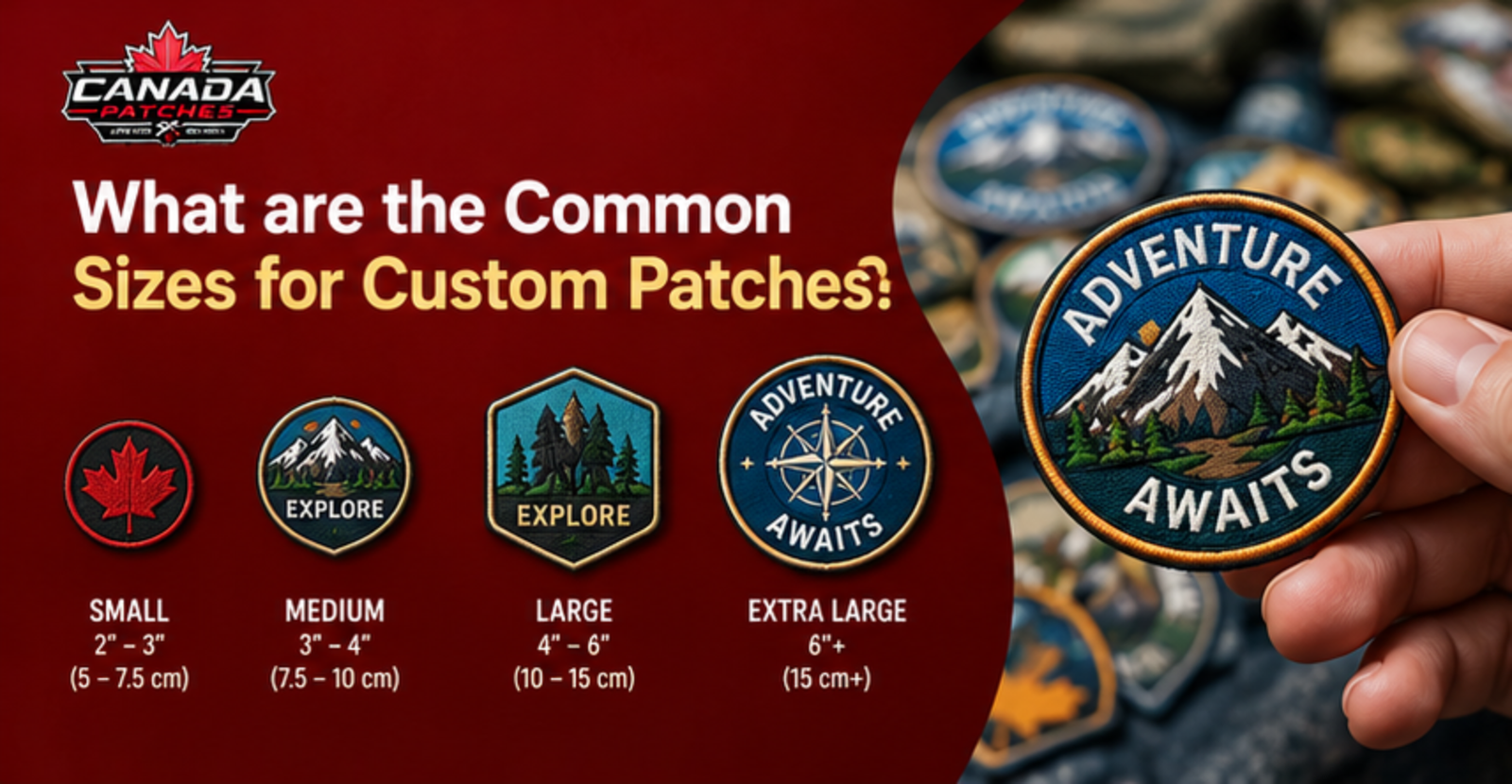
A well-designed patch can still look awkward if its dimensions or placement do not suit the garment. Size should therefore be considered in relation to the available space rather than judged separately.
Chest patches usually need to remain compact enough to sit comfortably without overwhelming shirts, polos, or work jackets. Back patches can accommodate substantially larger designs because they have more visual space. Sleeves work well for secondary identifiers, flags, symbols, or smaller branding elements.
Headwear requires particularly careful sizing because the front panel is curved and limited in height. This is relevant when designing custom patch hats Canada, as a patch that looks proportionate on a flat artwork file may appear too large once positioned on an actual cap.
Shape matters as well. Circular and rectangular patches are straightforward for many applications, while custom-cut shapes can follow a mascot, logo, object, letterform, or emblem. The best choice is usually the one that complements both the artwork and the product carrying it.
6. Which Patch Backing Prevents Problems With Frequent Washing or Reuse?
A patch is only useful if its attachment method matches how the item will be worn, washed, stored, or reused. Several backing options exist because no single attachment method is ideal for every application.
Sew-on patches are a traditional choice for garments that require a secure, long-term attachment. Stitching around the edge physically connects the patch to the fabric, making it particularly practical for frequently worn clothing.
Iron-on patches use heat-activated adhesive. They can provide a convenient application method when the garment material safely tolerates the required temperature. However, heat-sensitive fabrics should always be checked before application.
Hook-and-loop backing is valuable when patches need to be changed regularly. This is commonly useful for interchangeable names, roles, identifiers, tactical-style designs, or collections.
Adhesive backing is generally better suited to temporary or short-term applications than demanding everyday wear. The expected lifespan of the attachment should therefore be considered before choosing the backing.
7. How Can Businesses Use Patches Without Making Branding Look Overly Promotional?
Effective branding does not always require a large printed logo. Patches can offer a more integrated way of presenting a brand because they become part of the garment itself.
A restrained embroidered logo on employee workwear, for example, can identify a company while maintaining a professional appearance. Branded patches can also be applied to caps, jackets, bags, event merchandise, staff uniforms, or promotional apparel.
The tactile quality of embroidery can make branding feel more established than a simple surface print in certain applications. This is one reason businesses researching embroidery patches Toronto may consider not only the artwork but also thread coverage, stitch definition, colour matching, border construction, and final placement.
Consistency is particularly important. When patches are used across several garments or accessories, keeping dimensions, colours, typography, and positioning consistent helps create a unified visual identity.
The goal should not be to make branding as large as possible. A patch often works best when it is clearly visible while remaining proportionate to the product.
8. How Do You Choose Custom Patches That Match Their Actual Purpose?
The easiest way to select a patch is to start with its intended environment. A fashion patch, outdoor equipment patch, employee uniform badge, collectible patch, and promotional giveaway do not necessarily need the same construction.
For detailed artwork, woven or printed construction may reproduce small elements more effectively. For a classic textured finish, embroidery is often appropriate. For outdoor exposure, PVC may offer practical advantages because of its flexible and weather-resistant characteristics.
Colour should also be considered carefully. Strong contrast can improve the visibility of text and small design elements, while overly similar shades may cause details to blend together. Small lettering deserves particular attention because artwork that is readable on a computer screen may become difficult to reproduce once reduced to patch size.
A digital mock-up or proof is useful before production because it allows dimensions, colours, borders, spelling, positioning, and artwork details to be reviewed. Checking these elements beforehand is much easier than discovering an error after an entire order has been produced.
9. What Should You Check Before Ordering Custom Patches for a Specific Garment?
Before placing an order, consider the garment material, intended patch position, finished dimensions, artwork complexity, preferred patch type, backing, border, quantity, and expected conditions of use. These decisions are connected rather than separate.
A heavy embroidered patch may be perfectly suitable for a denim jacket but less appropriate for a lightweight fabric. An iron-on backing may sound convenient until the garment turns out to be sensitive to high heat. Similarly, very small text may need artwork adjustments or a different production technique to remain legible.
It is also useful to view the design at approximately its intended physical size. This can reveal whether lettering is too small, lines are too thin, or individual elements are too crowded. Simplifying artwork is sometimes more effective than attempting to preserve every detail.
For organisations, brands, teams, clubs, and individuals considering custom patches, planning these details before production can improve appearance, usability, and durability while reducing the likelihood of costly revisions.
Ready to Turn Your Design Into a Custom Patch?
Whether the goal is to personalise apparel, identify a team, strengthen a brand, update uniforms, or create distinctive merchandise, the right patch begins with a design and construction method suited to its real-world use. Explore professional custom patch options to compare materials, shapes, backing methods, borders, and finishes before placing an order.
Conclusion
Custom patches are versatile design and identification tools that combine visual communication with practical application. They can represent a company, organisation, team, achievement, event, community, personal interest, or creative idea while being adaptable to everything from uniforms and jackets to hats and bags.
Their effectiveness depends on more than the artwork alone. Material, construction method, size, placement, backing, border, garment type, and expected wear all influence the final result. Understanding these factors makes it easier to choose a patch that not only looks appropriate when new but continues to perform well in its intended setting.
Ultimately, the best custom patches are those designed around their purpose. When the production method, attachment style, artwork, and garment work together, a relatively small patch can become a durable and highly recognisable part of a product, uniform, brand, or identity.