Choosing the right patch can change how a logo, name, emblem, or brand message looks once it is placed on clothing. The difference is not simply about appearance. Embroidered vs woven patches involves two different construction methods, each suited to particular artwork, lettering, fabrics, and branding goals. Understanding those differences before ordering can help you avoid blurry details, unreadable text, or a patch that does not match the look of your apparel.
What Is the Real Difference Between Embroidered and Woven Patches?
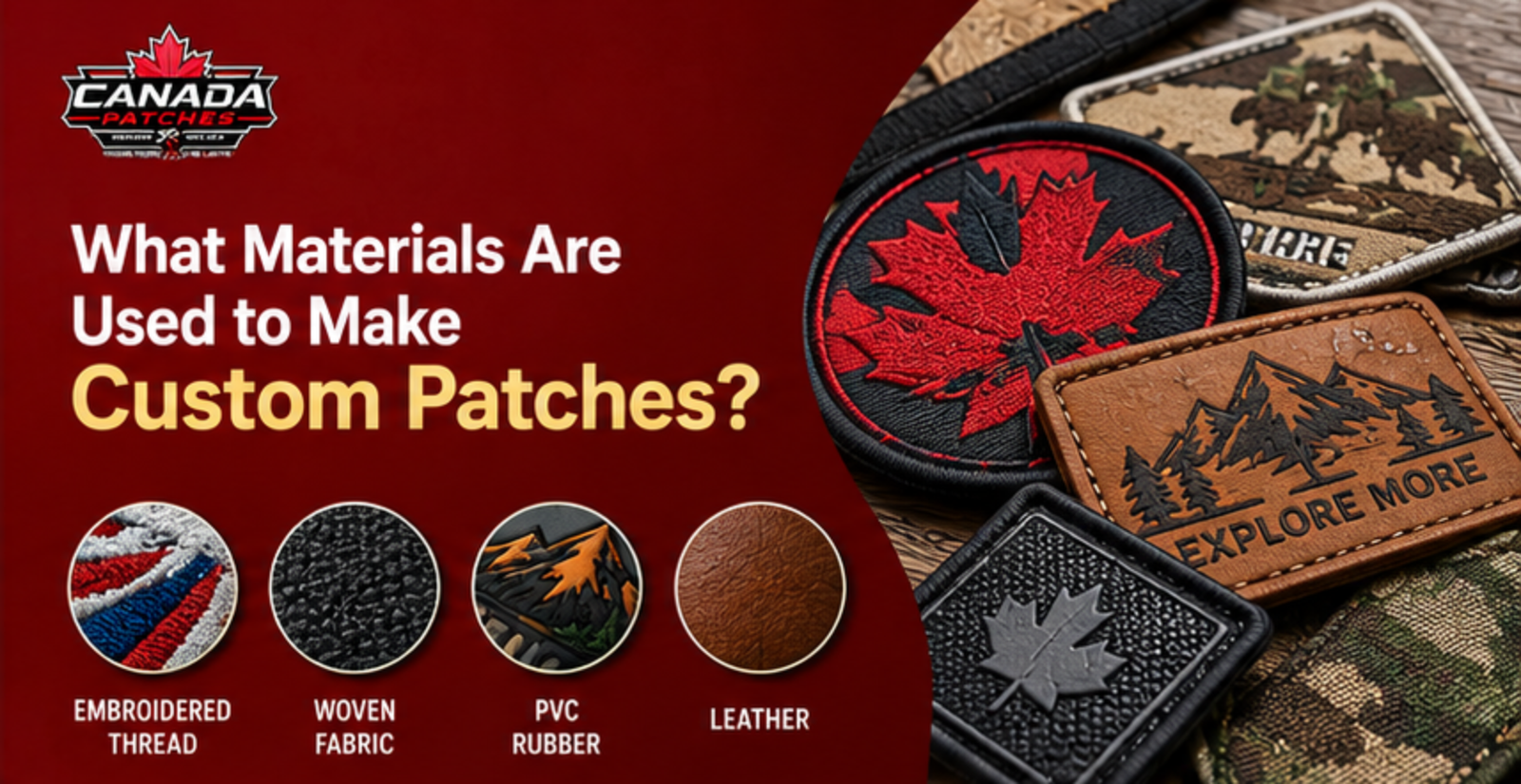
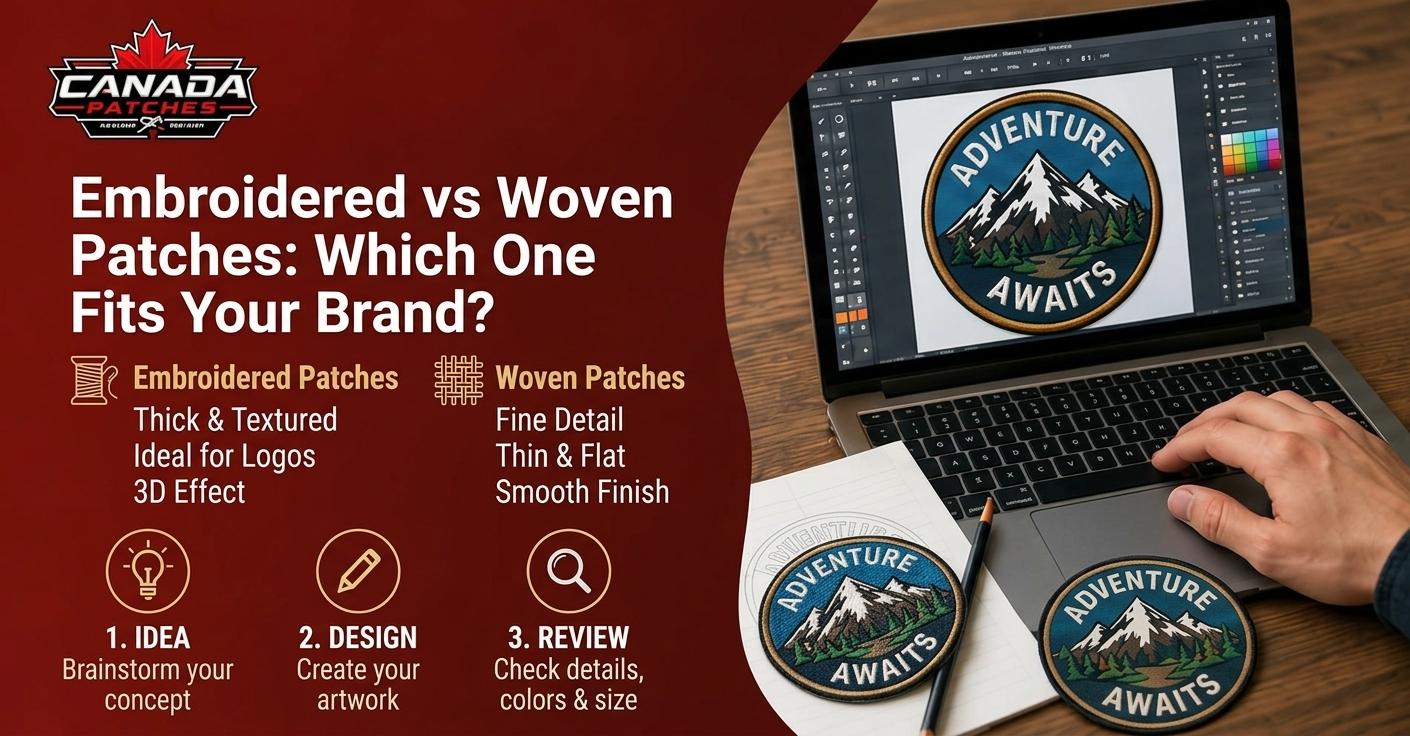
Embroidered patches are created by stitching thread onto a fabric backing. The raised thread produces a textured, traditional appearance that works particularly well for bold logos, uniforms, team designs, outdoor apparel, and designs where a tactile finish is part of the appeal.
Woven patches are made by weaving thinner threads together to create the design. Because the threads are finer and more closely packed, woven patches can reproduce small lettering, narrow lines, subtle shapes, and detailed artwork with greater visual precision.
In simple terms, embroidery emphasizes texture and dimension, while weaving emphasizes detail and a smoother finish.
This distinction is especially important when selecting Canada custom patches for a brand because the construction should support the actual design rather than simply follow a preferred aesthetic.
When Does an Embroidered Patch Make More Sense for a Brand?
An embroidered patch is usually the stronger choice when a brand wants its patch to have a classic, textured, and highly visible appearance.
The raised stitching gives logos more depth and can make simple designs stand out against jackets, uniforms, caps, bags, and other garments. Bold lettering and uncomplicated symbols also tend to work particularly well with embroidery.
Consider embroidered patches when your design includes:
Bold logos with clearly defined shapes
Large lettering or short names
Sports, club, military-inspired, or outdoor branding
Designs intended to have a traditional patch appearance
Artwork where texture adds visual interest
Uniform applications that need a recognizable emblem
Embroidery is not automatically better for every logo, however. Very small text and intricate artwork can become difficult to reproduce because the stitching requires enough space to maintain clean shapes.
Why Are Woven Patches Better for Fine Logos and Small Details?
Woven patches are particularly useful when precision matters more than raised texture.
The weaving process allows thinner threads to form closely spaced details. This makes woven patches a practical option for logos containing small typography, fine outlines, intricate symbols, or detailed brand marks.
For example, a company with a compact logo containing several lines of text may find that a woven construction keeps the design more legible than traditional embroidery.
Woven patches for brands are also useful when the desired result is sleek and contemporary rather than heavily textured. They can create a cleaner visual transition between the patch and the garment, making them suitable for modern fashion labels, promotional clothing, lifestyle brands, and detailed corporate identity work.
The important consideration is not simply how complicated the artwork looks on screen. The physical size of the patch also affects whether small elements can be reproduced successfully.
How Should You Choose Between Texture and Detail?
A useful way to approach embroidered vs woven patches is to ask what your audience should notice first.
If the goal is a bold, dimensional emblem that immediately reads as a traditional patch, embroidery may be the better fit. If the priority is preserving fine lines, small lettering, or a detailed logo, weaving may provide a cleaner result.
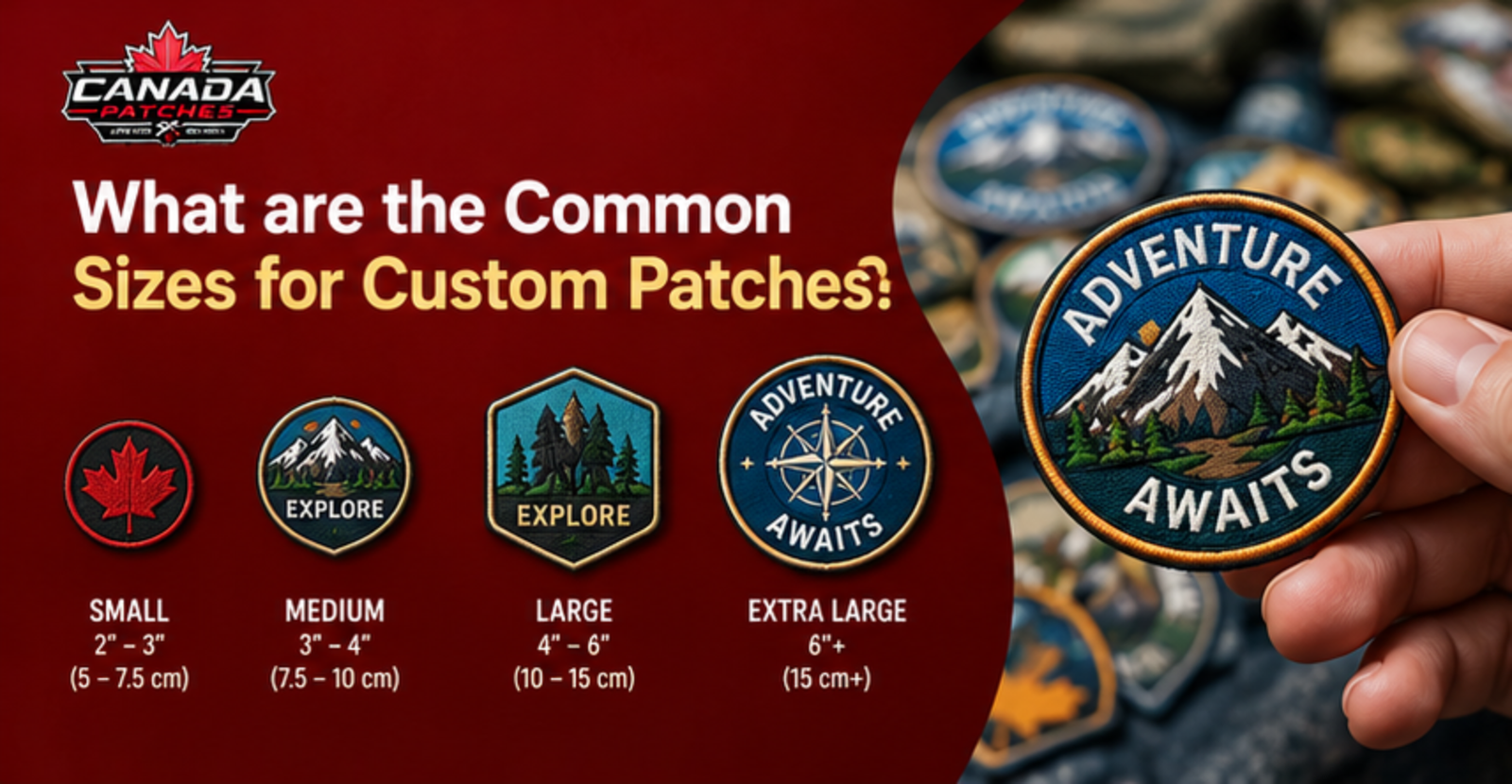
Think about your design at its actual production size rather than viewing a large digital file on a computer screen. Details that appear obvious on a monitor may become too small once reduced to a three-inch patch.
This is why a professional review of the artwork before production can be valuable. The right construction method should be selected according to the design's practical limitations, not just its appearance in a design file.
Do Custom Logo Patches Need Embroidery or Weaving?
Not necessarily. custom logo patches can work with either method, depending on the logo's structure and the intended brand experience.
A simple sports logo with thick lettering and a strong emblem may benefit from embroidery because the raised stitching reinforces its bold identity. A technology company with thin lines, compact typography, or several small visual elements may be better served by a woven patch.
Brand application matters, too.
A patch placed on a heavy work jacket may benefit from the substantial appearance of embroidery. The same logo used on lightweight fashion apparel might look more refined with a flatter woven construction.
The question should therefore be: Which patch construction communicates the brand accurately at the size and placement where it will actually be used?
Are Woven Patches a Better Choice for Modern Apparel Brands?
For many contemporary brands, yes, particularly when the identity depends on clean typography and detailed graphics.
Branded patches for apparel need to work as part of the overall garment rather than appearing disconnected from it. A woven patch can provide a relatively smooth surface that complements minimalist clothing, streetwear, fashion collections, promotional merchandise, and lifestyle products.
Woven construction can also be useful when a brand wants its logo to retain subtle details without introducing a heavily raised texture.
However, modern does not automatically mean woven. A heritage clothing company, motorcycle brand, sports organization, or outdoor label may intentionally want the depth and traditional character associated with embroidery.
The best choice is ultimately the one that supports the visual language of the brand.
What Should You Consider Before Ordering Canada Patches?
Before placing an order, evaluate five practical factors: artwork complexity, patch size, lettering, garment type, and intended use.
First, examine the artwork. Does it contain fine lines or tiny elements? If so, weaving may be worth considering.
Next, consider size. A detailed logo may reproduce well at four inches but lose important elements at two inches.
Then assess the lettering. Short, bold text is generally easier to reproduce through embroidery, while smaller lettering may benefit from the finer construction of woven patches.
The garment itself also matters. Heavy jackets, uniforms, caps, bags, and lightweight apparel can create different visual requirements.
Finally, consider how the patch will be used. A promotional item, staff uniform, retail garment, club jacket, and limited-edition fashion piece may each require a different visual treatment.
Can Small Text and Fine Lines Survive on an Embroidered Patch?
They can, but there are practical limits.
Embroidery depends on individual stitches, meaning extremely small lettering or narrow lines may not remain clearly defined once stitched. Increasing the patch size can sometimes solve the problem, but that may not be practical for every garment.
Woven construction can often handle these details more effectively because its finer threads create a smoother field for small elements.
This does not mean every detailed logo should automatically become woven. The final result depends on the artwork, dimensions, thread selection, and production specifications.
For brands where readability is essential, reviewing the design at its intended physical size is one of the most useful steps before production.
Which Patch Type Works Best for Uniforms, Fashion, and Promotional Clothing?
The intended application can help narrow the decision.
Uniforms often benefit from embroidery patches because their textured appearance creates a recognizable, established look. They are particularly appropriate for organizations, clubs, teams, workwear, and identity-focused garments.
Fashion apparel offers more flexibility. Woven patches can suit minimalist or detailed designs, while embroidery can add texture and a more traditional character.
Promotional clothing depends heavily on the logo. A simple, bold corporate mark may look excellent with embroidery, while a detailed brand symbol may benefit from weaving.
For Canada custom patches, thinking about the garment first can prevent a common mistake: choosing a patch solely because it looks attractive by itself rather than because it works with the finished product.
How Can You Tell Which Patch Construction Fits Your Brand?
The simplest decision framework is to match the construction to the brand's visual priorities.
Choose embroidered patches when you want:
Raised texture
A classic patch appearance
Bold and highly visible designs
Strong visual depth
A traditional or rugged brand aesthetic
Choose woven patches when you want:
Fine lines
Smaller lettering
Detailed logos
A smoother surface
A clean and contemporary appearance
If the design sits somewhere between the two, ask which characteristic matters most: texture or precision.
That single question can make the decision considerably easier.
Is There a Clear Winner in the Embroidered vs Woven Patches Debate?
There is no universal winner. The better option depends on what the patch needs to communicate and how accurately the construction can reproduce the artwork.
Embroidery remains an excellent choice for bold, dimensional, recognizable designs where texture contributes to the identity. Woven construction is often more suitable for detailed logos, small typography, and brands seeking a smooth, precise finish.
The most effective patch types comparison therefore starts with the design rather than the material. Consider the artwork, physical size, garment, audience, and branding objective together.
A well-designed patch should not only look good in a product preview. It should remain recognizable, readable, and visually consistent when it is attached to the finished garment.
For brands investing in custom patches, that practical approach makes the choice much clearer: choose embroidery when texture strengthens the design, and choose weaving when precision is the priority.