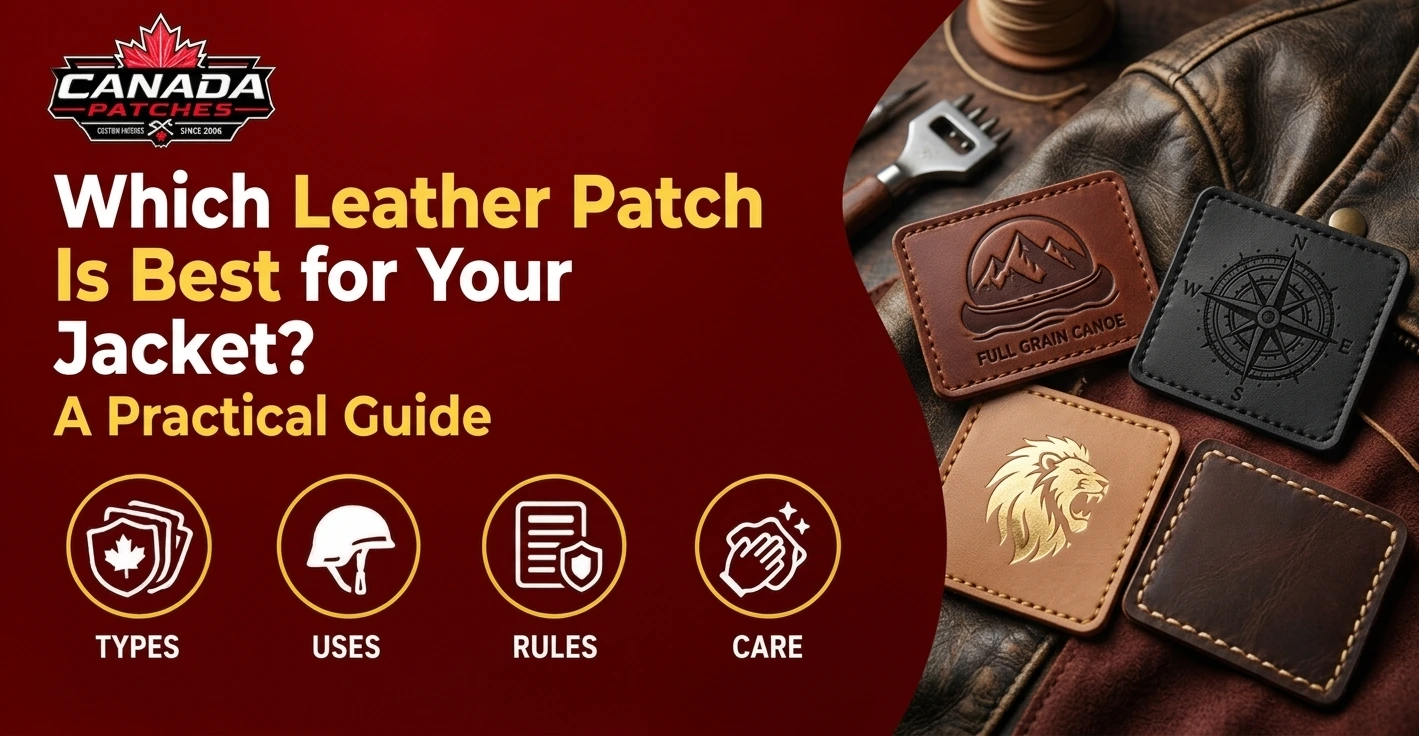
A suitable patch for your leather jacket will be based on various factors such as the material used in making your leather jacket, your style, design and attachment needs. Real leather provides a traditional look while faux leather is an option for versatility and suede can give your jacket a soft feel.
What Are Leather Patches?
Leather Patches are decorative or functional pieces made from natural hide or synthetic materials designed to resemble leather. They can feature initials, logos, artwork, names, symbols, or other personalized details. Depending on their construction, they can be attached using stitching, compatible adhesives, or specialized fastening systems.
Such accessories can be widely used for decorating motorcycle clothes, bomber jackets, jeans clothes, uniforms, as well as fashionable outerwear. They can make an otherwise dull piece of clothing look more interesting or serve as a symbol of affiliation or affiliation to some brand, or make clothing appear old fashioned.
However, leather accessories differ from fabric decoration by having a distinct texture and structure. Its thickness, flexibility, finishing and edge treatment play an important role in choosing the right accessory. It has to be both stylish and convenient to wear.
One also has to be able to draw the line between decoration and repair since one accessory may be used to mask some flaws of the jacket but not to fix damage.
Types Of Leather Patches by Material, Design, Shape and Style
Different materials and manufacturing techniques produce different visual effects. Understanding these options makes it easier to select a design that suits your garment.
Genuine Leather
Natural leather provides a traditional appearance, distinctive grain, and premium finish. It can develop a unique patina over time, making it attractive for classic motorcycle clothing, vintage-inspired outerwear, and premium casual garments.
However, natural hide requires appropriate maintenance. Excessive moisture, unsuitable cleaning products, and prolonged exposure to direct sunlight can affect its appearance. Thickness also matters because a rigid piece may sit awkwardly on a flexible jacket.
Faux Leather
Faux leather is manufactured from synthetic materials designed to imitate natural leather. It generally offers consistent colors, predictable textures, and a range of finishes at different price points.
This option can suit fashion garments, promotional clothing, and projects requiring several matching pieces. Quality varies considerably, so check resistance to cracking, peeling, and everyday wear before purchasing.
Suede
Suede has a soft, textured surface that creates a subtle and sophisticated appearance. It complements casual outerwear and vintage designs, particularly when paired with muted colors and understated lettering.
Its textured surface can collect dust and absorb moisture more readily than smooth finishes. Therefore, consider the jacket's intended use and maintenance requirements before selecting this material.
Embossed, Debossed and Printed Designs
Embroidery is used to create raised images, and debossing involves pressing lettering or imagery into the material. Both techniques will give an elegant and professional look to simple names and logos and symbols.
Printing, on the other hand, allows for more intricate designs to be used as well as the use of several colors. The success of the process, however, relies on the printing procedure itself.
Popular Shapes and Finishes
Circular, rectangular, oval, shield-shaped, and custom-cut designs are common options. Round shapes work well for compact emblems, rectangles accommodate names and lettering, and shield designs provide a traditional motorcycle-inspired appearance.
Smooth edges create a clean, modern finish, while decorative borders can give the design a more traditional look. Select a shape that fits the available panel without covering zippers, pockets, or functional seams.
Best Patches for Men's Leather Jackets by Jacket Style
The right design should complement the garment's silhouette rather than compete with its existing details.
Motorcycle Jackets
The design of motorcycle jackets typically includes strong shoulders, metal fittings, and unique paneling. Patches and emblems that include small icons, shields, and minimalistic logos will work well on these garments without making too much of a statement.
When selecting Patches For Men’s Leather Jackets, keep in mind the aesthetics and practicality of your choice. Riding gear will need extra consideration due to possible interference with protection.
Bomber Jackets
Bomber jackets generally have a relaxed silhouette and a clean design. Compact rectangular or circular decorations can add personality without making the garment appear crowded.
Lightweight materials are often preferable when the jacket has a soft lining or flexible construction. Upper-sleeve placement can work particularly well for small logos or initials.
Vintage and Distressed Jackets
Vintage-inspired garments pair well with aged finishes, brown tones, dark colors, and simple embossed artwork. A carefully selected design can complement the jacket's existing character without creating excessive contrast.
Before attaching anything, inspect the garment for cracking, brittle areas, peeling coatings, and weakened stitching. Older leather may not tolerate the same installation process as a newer jacket.
Fashion and Casual Jackets
Fashion garments allow greater flexibility with colors, shapes, lettering, and personalized artwork. Minimalist initials suit understated styles, while contrasting designs create a more noticeable statement.
For a balanced result, coordinate the decoration with the jacket's hardware, stitching, and overall color palette.
How to Attach a Leather Patch to a Jacket
It all depends on the condition of the garment, the backing, and the purpose of the attachment. The leather is permanently marked, so don't experiment with things that are not meant for leather.
Sewing
Sewing may serve as a durable attaching technique if both the garment and the decoration are suited to sewing. All stitches will remain in the leather and too many stitches might damage some parts.
Professional installation is advisable for expensive garments, thick hides, or jackets with complex linings. An experienced specialist can assess the material and select an appropriate stitching technique.
Adhesive Attachment
Some adhesives are formulated for specific leather or synthetic surfaces. When compatible, they can secure lightweight decorations without stitching through the garment.
Nevertheless, unsuitable products may leave stains, create stiff areas, or damage the surface coating. Check the manufacturer's instructions and test on a discreet area when possible. Avoid applying an adhesive directly to valuable leather unless its suitability has been confirmed.
Iron-On Attachment
Conventionally, iron-on graphics utilize heat-sensitive adhesives, but heat may be harmful to leather material, lead to discoloration of plastic coating, or cause shrinking and hardening.
Do not take it for granted that heat-sensitive adhesives will not harm any jacket. Apply this technique only when the manufacturer of the jacket and graphic approves it.
Comparison Table: Which Attachment Method Is Best?
Where to Place a Patch on a Men's Leather Jacket
Placement affects look, feel, and longevity. Place the design temporarily first before making any permanent changes to see how it looks when standing, sitting, and moving around.
Chest
The chest is suitable for small logos, initials, and simple emblems. Keep the design clear of pockets, zippers, and prominent seams to maintain a balanced appearance.
Upper Sleeve
The upper sleeve provides a practical location for compact designs. Check that the decoration does not rub against the body or restrict arm movement.
Back Panel
The back offers more room for larger artwork and lettering. However, a heavy design may reduce flexibility or make the garment uncomfortable, particularly when the leather is already thick.
Lower Front or Waist
A simple design element on the front and bottom may serve as a decorative touch. Such designs should be placed in areas where there is no exposure to the continuous wear and tear of belts or bags.
In motorcycle apparel, make sure that no decorative feature interferes with any protective or safety-related elements. The instructions from the manufacturer should be followed.
How to Choose the Right Patch for Your Jacket
Choosing an appropriate design goes beyond picking an aesthetically pleasing image. Take into account these criteria before placing an order.
Consider the fabric type: While natural leather can accentuate high-quality clothing, artificial variants can ensure uniform coloring and easy customization.
Examine the condition of the jacket: The cracked, peeling, or weak leather can fail to hold stitches or adhesives.
Find the right size: The design should be proportional to the size of the panel it will decorate without affecting functionality and movement.
Ensure the colors match: Combining black and dark brown creates a traditional look, while tan or contrasting colors help highlight the ornamentation.
Think about the finish: Embossed letters give subtle decorations, whereas printed illustrations provide opportunities for detailed ornaments.
Think of the maintenance: It is important to check if the decoration is able to withstand regular cleaning, moisture and use of the jacket.
Ensure compatibility: The backing and installation technique should be compatible with the fabric of your garment. If you are unsure, consult a leather expert.
The best option is the one that satisfies your design preferences and does not interfere with the integrity of the garment.
Custom Designs: What to Know Before Ordering
Personalized decorations allow individuals, businesses, motorcycle clubs, and fashion labels to create distinctive designs. Before ordering, determine your preferred material, dimensions, shape, colors, artwork, and attachment method.
When comparing suppliers offering Canada custom patches, examine their material specifications, customization options, minimum order quantities, production timelines, and delivery policies. Ask whether they offer genuine or synthetic materials, embossed lettering, printed artwork, and custom-cut shapes.
Request a digital proof before approving production. Review spelling, logo proportions, border thickness, and the visibility of small details. Complicated artwork may lose clarity when reproduced at a small size, so simpler designs can sometimes produce better results.
Also, it would help to confirm whether the quoted price has included setup charges, samples, backing facilities, and shipment. In case of bulk order, find out from the supplier how they ensure uniformity of colors, size, and finish in all the decorations ordered.
In case you are ordering only one decoration, appearance, comfort, and compatibility should be your priority.
Frequently Asked Questions
What kind of patch will work best on leather?
A suitable decoration may consist of leather or synthetic material that is compatible with the jacket’s surface. The most suitable way of decorating the jacket will depend on the type of the surface and the way in which it will be fixed to the surface.
Do patches work on leather jackets?
Yes, decorations can be attached to leather jackets when the materials and installation method are compatible. However, stitching leaves permanent holes, and unsuitable adhesives or heat can damage the surface. Seek professional advice when working with valuable garments.
Which type of leather is best for a jacket?
Full-grain and top-grain leather are popular choices. Full-grain retains its natural surface and can develop a distinctive patina, while top-grain is generally processed to provide a more uniform finish. The best option depends on budget, appearance, durability, and maintenance preferences.
Can you patch a hole in a leather jacket?
Yes, some holes can be repaired using a suitable leather repair patch or professional restoration technique. The correct approach depends on the hole's size, location, and surrounding damage. Tears affecting seams or structural areas may require specialist repair rather than a decorative covering.
Can you iron leather patches onto a jacket?
Direct ironing is generally unsuitable unless the garment and decoration manufacturers explicitly approve the required temperature and method. Heat can damage natural leather and synthetic coatings. A compatible alternative attachment method is usually preferable when heat safety is uncertain.
Where should you put a patch on a men's leather jacket?
Chest, upper arm, and back pieces are typical areas. Select a spot that matches with the outfit and is away from pockets, stitching, zipper, protective parts, and surfaces subjected to friction. Place the design temporarily before fastening it in place.
Final Thoughts
The perfect decoration should be composed of the right material, design, and technique of fastening. Leather is an authentic finishing material; there are also numerous synthetic materials that allow more individualization of the patch design, and there is also suede which gives an additional soft touch to the decoration.
If you are searching for custom leather patches for your jacket, first think about the style of your jacket, its condition, purpose, and how you would maintain the patch. It is essential to check the compatibility with the decoration before making any decisions.