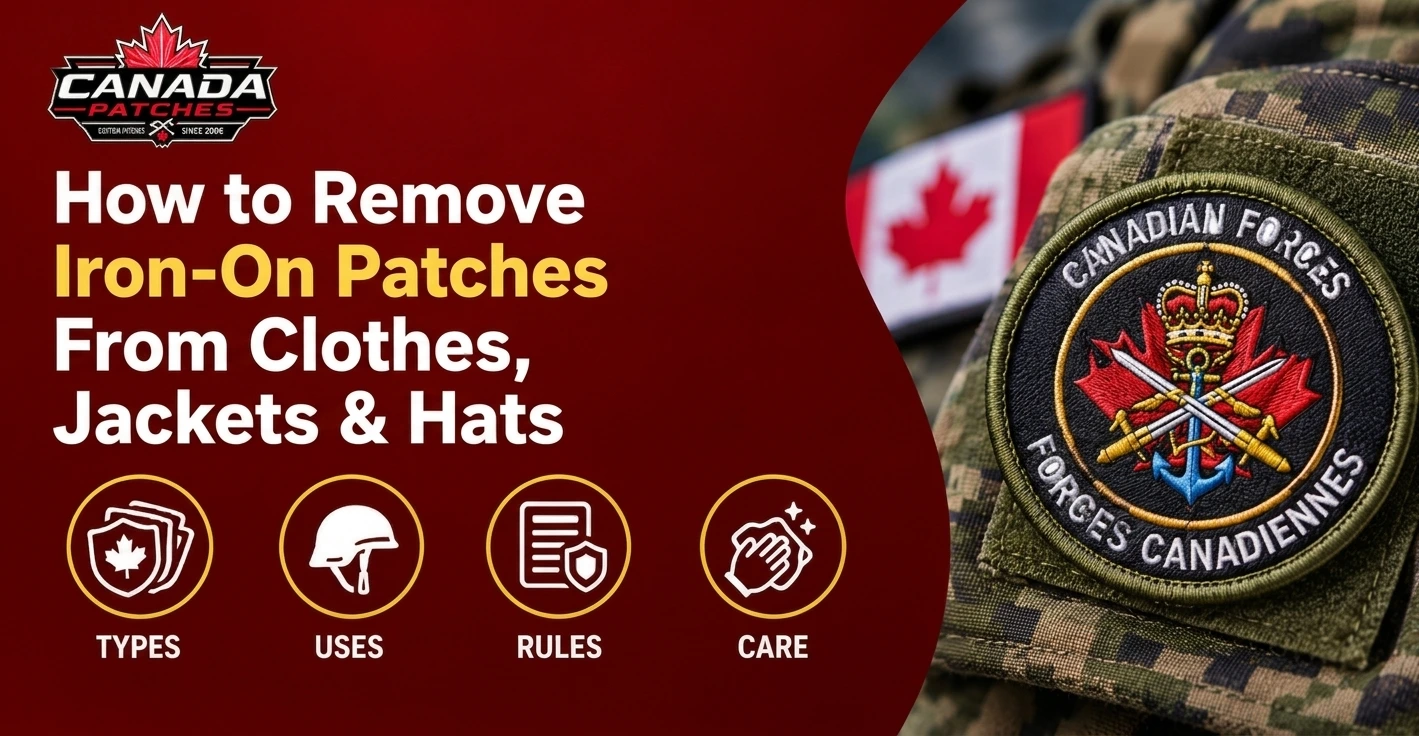
How to remove iron on patches will depend on the type of fabric, adhesive used, and age of the design. Most of the time, heat, peeling, and correct residue removal will do the job in helping you remove the patch without any harm done to the cloth. It is important to always read the care label before doing anything.
Whenever you want to refresh your denim jacket or your favorite shirt or even remove some unwanted design from your cap, you should always take your time to do it. Hurried removal of a patch might ruin the fabric, tear the fibers, or cause the appearance of sticky stains.
Why Iron-On Patches Are Hard to Remove
Iron on patches can be fixed to clothes using heat-activated adhesive. In the process, heat makes the adhesive flexible enough to stick to the material. After cooling down, the adhesive forms a strong bond meant to resist normal use and cleaning.
Removing this bond can be challenging because the adhesive may penetrate fabric fibers. Repeated washing, drying, and friction can also make certain adhesives harder to loosen. Older designs may leave sticky residue or a visible outline after removal.
The fabric composition itself is an equally important characteristic to consider. Cotton tends to be more resilient to heat compared to other delicate synthetic materials, but polyester might melt or become shiny due to excessive heat. Leather, wool, and molded hats need special attention because of the danger of damaging the material or its finish.
By considering these differences, you will be able to select a proper removal technique instead of tearing the design off.
Which Removal Method Should You Use? (Quick Comparison)
The best course of action would depend upon the material and its adhesive condition, as well as the quantity of the residue left behind.
Careful heating would be the most feasible choice for many tough cotton clothes. However, synthetics, wool, and leather materials would need different methods. Professional cleaning would be recommended for costly items and difficult-to-remove adhesives.
No single method works for every fabric or adhesive. Always prioritize the garment's care instructions over general removal advice.
How to Remove Iron-On Patches With an Iron
An iron can soften the adhesive and make a design easier to lift. The goal is to loosen the bond gradually rather than apply as much heat as possible.
Take the following steps:
Review the care instructions. Make sure that the garment is okay with ironing and find out what temperatures it may not withstand.
Arrange the garment. Put the item on an ironing board in such a way that the design is up.
Cover the garment. Lay a thin layer of a cotton material over the design.
Warm the item. Apply heat in a short burst to the temperature appropriate to both the garment and the adhesive.
Take a hold. When the adhesive becomes soft, take one corner of the design using tweezers.
Start peeling. Pull off pieces of the design carefully and gradually.
Check the surface. Allow the garment to cool down and check its condition afterwards.
Never force a stubborn design or increase the temperature beyond the garment's safe limit. Stop immediately if the fabric begins to discolor, shrink, become shiny, or deform.
Do not use a hot iron near rubbing alcohol or other flammable solvents. Complete the heat-based treatment first, allow the garment and work area to cool, and only then consider a compatible cleaning product.
Other Removal Tricks That Actually Work
In other cases, reheating the fabric might soften the design while leaving a film of glue behind. Other methods might work if they are appropriate for the fabric.
Rubbing alcohol: Try this method in a small spot first to see if there is any change in the appearance of the material. If not, use a cotton swab to dab the residue.
Adhesive remover for fabric: Get an adhesive remover that is specifically intended for use on the material you are trying to clean. Read the instructions.
Washing: Wash the fabric in accordance with the manufacturer’s guidelines after you remove the residue.
Professional help: Contact a professional cleaner if the adhesive will not come off.
Avoid sharp blades, abrasive scrubbing, and untested household chemicals. Never mix cleaning products because their ingredients may react dangerously. When using any solvent, follow the label instructions and keep the product away from flames and hot appliances.
How to Remove Iron-On Patches by Fabric Type
Different materials respond differently to heat and adhesive treatments. Adjust your approach to the garment instead of applying the same technique to every item.
Cotton Shirts
Cotton generally tolerates more heat than many synthetic materials, making controlled reheating a useful option. Cover the design with a thin cotton cloth, apply gentle heat, and lift the edges gradually. Check for fading and adhesive marks before washing.
Denim Jackets
Denim is relatively sturdy, but excessive heat can still affect its color and finish. Work slowly around seams, pockets, and thick areas where adhesive may be harder to loosen. Avoid forceful pulling that could damage the weave.
Polyester Clothing
Polyester may also burn, melt, shrink, or form a shiny surface upon exposure to excess heat. Make sure you use the correct temperature based on the care label. In case you cannot remove the glue without damaging it, try using a suitable remover.
Wool and Delicate Fabrics
Wool and other delicate materials like silk may be adversely affected by heat, moisture, and chemical solvents. Do not try too hard to peel the sticker or iron it off if the care label does not recommend such procedures.
Hats and Structured Caps
Hats can be challenging because their panels are curved and may contain stiffeners, linings, or internal supports. When removing custom hat patches, work slowly and avoid saturating the material. Excessive heat may distort the brim or weaken the structure, particularly on caps containing synthetic components.
Leather Jackets
Leather requires a different approach from ordinary fabric. Heat can dry or discolor the surface, while unsuitable solvents may damage its finish. If you need to remove custom leather jacket patches, consult a leather-care professional rather than experimenting with a household iron or strong adhesive remover.
Common Mistakes to Avoid
Even when using the right removal process, errors can occur due to its misuse. Here are some mistakes that should be avoided:
Rapid removal: Ripping off a design in one attempt could result in pulling and tearing of the fabric.
Exposing it to excessive heat: Excessive heat can burn cotton and synthetic materials and affect the finishing.
Neglecting the patch test: Some chemicals can alter the dye or coating.
Rough scraping: Tools such as blades will cut the fabric and even leave a mark on it.
Ignoring the care label: Not all clothing is ironable or capable of undergoing chemical removal.
Exposing it to the dryer immediately: Some adhesives can harden if exposed to excessive heat.
Inspect the surface throughout the process and stop if the garment shows signs of damage. Protecting the fabric is more important than removing every trace of glue in one attempt.
Should You Remove It or Cover It?
Removing a design makes sense when you want a cleaner appearance, are changing your style, or need to prepare a garment for another purpose. However, the fabric underneath may be faded compared with the surrounding material. Stitch holes, adhesive marks, and outlines can also remain visible.
Another method of dealing with patches is to cover the current one in cases where it is properly fixed on the garment and it is in excellent condition. One needs to select a patch which is large enough to cover without affecting the movements.
If you want a new design, buy custom iron on patches online after checking the size, backing type, application instructions, and fabric compatibility. Consider whether the replacement will cover the entire outline before selecting its dimensions.
Another option is custom pvc patches for clothing, which may suit certain garments when the attachment method is compatible. Confirm whether the chosen design requires sewing, adhesive, or another application technique instead of assuming every patch can be ironed on.
Planning Your Next Patch? Apply It Right So It Lasts (and Comes Off Cleanly Later)
Proper application helps a design stay secure and reduces avoidable fabric damage. Begin with clean, dry material, follow the manufacturer's recommended temperature and pressing time, and allow the adhesive to cool completely before handling the garment.
When comparing suppliers, Canada custom patches may be an option for clothing, uniforms, and accessories. Compare backing types, design dimensions, material requirements, and application instructions before selecting a product.
Consider future detachment while installing a new pattern. If you anticipate having the artwork removed at a future date, sewable backing might be more accommodating than a durable adhesive. Save the care and detachment instructions that come with the product for reference should your needs change.
Proper installation, proper material choice, and good maintenance will all factor into a favorable outcome.
FAQs
What is the easiest way to remove an iron-on a patch?
If the garment is suitable for cotton clothing, then heating up the glue and lifting off one edge using the tweezers can be the most convenient method to use. Always check the label before applying the heat.
How can I remove iron-on patch residue?
Use a compatible adhesive remover after testing it on a hidden area. Follow the product instructions and avoid aggressive scraping. Delicate garments may require professional cleaning.
Do iron patches come off easily?
Not always. Removal depends on adhesive strength, fabric composition, application temperature, and washing history. Older designs may require repeated gentle treatment.
Can iron-on patches be removed and reapplied?
Sometimes, but removal may damage the original adhesive backing. Reapplication is not guaranteed to work, so a replacement may provide a more reliable result.
How permanent are iron-on patches?
Durability varies according to adhesive quality, application technique, washing conditions, and everyday friction. These designs are intended to remain attached but are not necessarily permanent.
Are you supposed to peel the back of iron-on patches?
While some products have a coating which is meant to be stripped off prior to application, others do not have a coating, but heat activated adhesive instead.
Final Thoughts
In order to remove a design properly, one should be patient and possess appropriate equipment as well as knowledge about fabric requirements. In case of strong fabrics, heat and careful peeling might do the trick; however, more fragile clothes may require the intervention of professionals. Look for any adhesive residues prior to washing clothes and choose an appropriate attachment method.
With the help of proper attachment techniques and no overheating or overforcing, the process of restoration can be done properly. In order to apply a new design on a garment, one should examine all the properties of the new design.