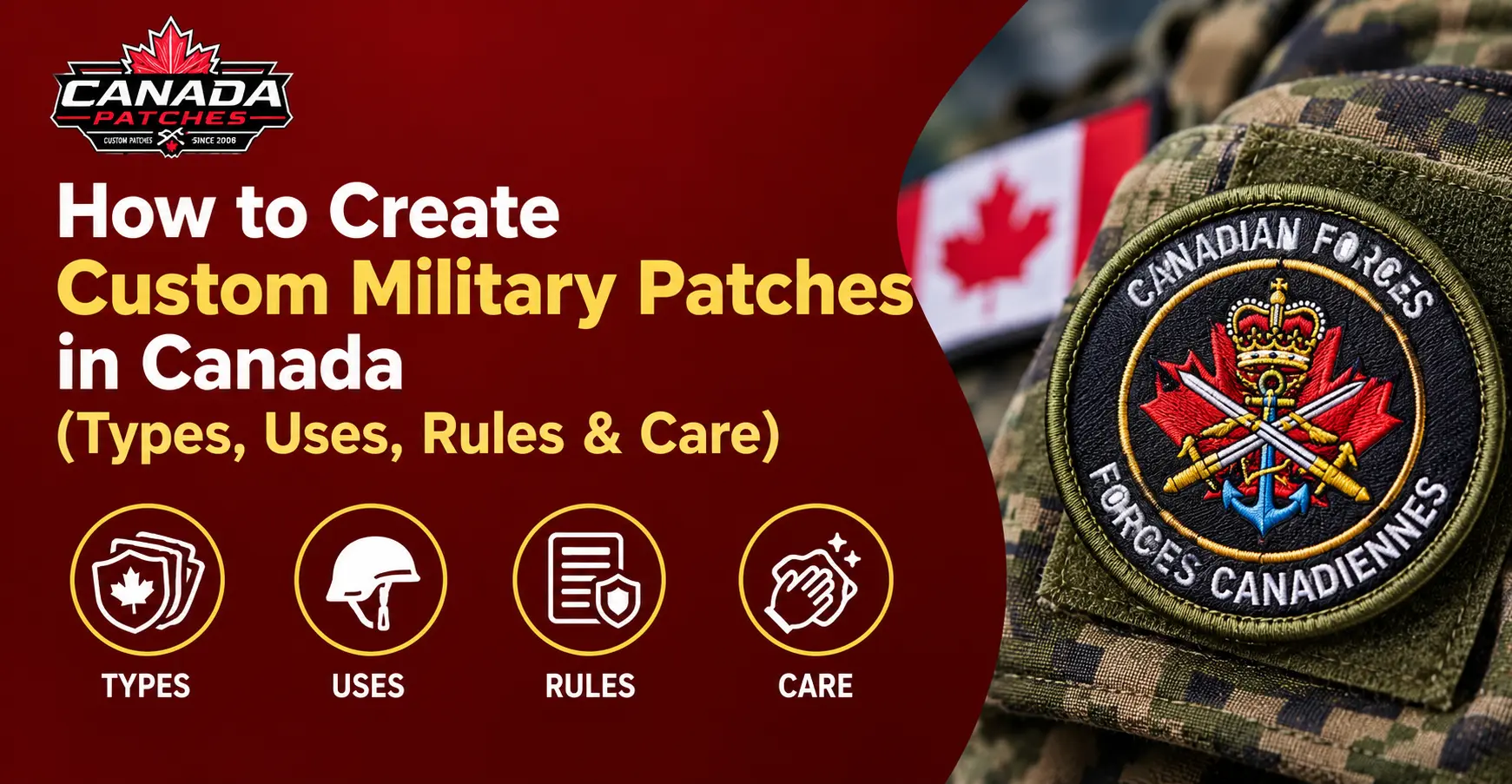
Custom-made military patches can be used to signify units, organizations, accomplishments, and individualize jackets or uniforms. The making of such patches requires selecting appropriate material, colors, design, and methods for attaching them, in addition to complying with the Canadian laws as well as military uniform guidelines.
What Are Custom Military Patches?
Military patches are either embroidered, woven, printed or molded fabric squares featuring names, symbols, insignia, or memorial designs. Military patches can be applied to clothing, jackets, backpacks and other such items.
Unlike the usual decorative patches, military patches can convey some kind of message about the organization and its members. This means that one should think about the intended use of the patch, the correctness of the design used, and the need for permission to create the insignia of any organization.
Another factor influencing the end result is the material used in the creation of patches. The embroidery makes the patch look classical, but the woven patch allows for detailed lettering.
Common Uses of Military Patches in Canada
Military patches have the ability to identify, commemorate, and decorate individuals and groups in the military. This is determined by the patch design, organization, and intended use.
Examples of patches include:
Identification patches and insignia of recognized organizations.
Commemorative patches for occasions such as training exercises and anniversaries.
Patches for veterans and military history displays.
Patching personal items such as jackets, backpacks, and outdoors gear.
Designs of patches that are only meant to be collectors’ or military enthusiast items.
Some organizations make personalized patches to help identify their members or commemorate shared events. Decorative patches must not imply that a person is an officer in the military or completed service in the military.
For collectors and civilian users, Uses Military Patches can include displaying historical designs, commemorating military events, and personalizing suitable clothing. The intended purpose should guide the design, material, and attachment method.
Types of Military Patches
There are different styles of patches, and each one provides a distinct level of detail, flexibility, and durability. Depending on its intended usage and the environment that the patch will be used in, the most appropriate style must be chosen.
Embroidered patches are mostly chosen for their texture, while woven ones work best where detail matters. PVC patches may be handy where outdoor usage is expected; however, compatibility with different fabrics must first be confirmed.
Understanding the Types of Military Patches helps buyers compare construction quality, appearance, maintenance requirements, and overall suitability before placing an order.
Are Custom Military Patches Legal in Canada?
There is no immediate illegality associated with the creation of military-style patches in Canada. However, the design, the intended use, and even the indication of official status may influence the legality of reproducing and wearing a specific patch.
Do not reproduce protected insignia without obtaining permission or represent yourself as serving military personnel if that is not the case. Canadian laws pertaining to official insignia, uniforms, impersonation, and intellectual property may influence the legality of certain situations.
Active personnel of the Canadian Armed Forces will need to consult relevant dress codes and regulations before ordering any special insignia. Civilian personnel will need to differentiate between commemorative items and military identification.
How to Create Custom Military Patches: Step-by-Step
A properly designed patch will enhance its appearance, readability, and durability.
Define the purpose: Decide whether your patch should be used for civilian wear, collecting, events, equipment, or authorized uniforms.
Plan your design: Decide on the text, colours, images, dimensions, and shape of your patch. Remember to make small text legible.
Select the material: You may choose embroidery for texture, woven material for details, PVC for some outdoor patches, and printing for more complicated designs.
Select the backing: Sew-on backing is very secure, while hook-and-loop backing is removable when appropriate. Iron-on backing is convenient for some materials.
Specify the details: Confirm the size, border, colours, quantity, and attachment method. Also, request a proof or sample before placing the order.
Inspect the order: Check for flaws such as loose threads, uneven edges, and incorrect colours.
When planning how to create Military custom patches, provide the manufacturer with clear artwork, precise measurements, and the intended application. Confirm that the chosen backing will work with the garment or equipment before production begins.
How to Attach Military Patches
The method of attaching patches will depend on their backing, the fabric, and the frequency of use.
Machine-stitched patches: Place the patch firmly and sew around the perimeter using appropriate thread. This is a viable alternative for patches that will be used often.
Iron-on patches: Iron the patch according to the recommended temperature and time. First, test the fabric and use only heat-compatible materials.
Hook-and-loop patches: Attach the patch to a compatible surface, ensuring the fastening area is clean.
Professional attachment: If the material is thick or the jacket is expensive, consider consulting a professional.
If you wear an official uniform, follow the prescribed instructions for attaching patches.
How to Care for Military Patches
Maintenance prevents fading, fraying, peeling, and damage due to moisture or road salt.
Dust can be removed using a soft brush before washing. Follow the directions provided by the manufacturer of the jacket and patch, including avoiding high temperatures, strong chemicals, and excessive scrubbing. Air-drying may prove to be a better option for certain materials.
In Canada during winter, road salt tends to leave residue on jackets and bags. It should be cleaned promptly using a soft, slightly damp cloth and, if required, a suitable fabric cleaner.
The Care of Military Patches depends on the construction method. Embroidered patches may benefit from gentle brushing, whereas PVC patches can often be wiped clean. Always test cleaning products on an inconspicuous area before using them on the entire garment.
How to Choose a Custom Patch Maker in Canada
The ideal supplier must be able to offer proper specifications, quality workmanship, and suitable materials depending on the application the patches will serve.
Compare the variety of patch types, designs, backing options, quantities, prices, delivery costs, and production times offered by different suppliers. Inquire whether they provide digital proofs or samples before mass production.
Inspect the stitching, borders, colours, and lettering on previous patches. A good supplier will advise on the appropriate material and attachment method depending on the fabric and weather.
When comparing custom police patches or military patches, prioritize durability, clear design reproduction, and compatibility with the intended garment instead of choosing solely on price. Request written confirmation of specifications before approving production.
Frequently Asked Questions
How to cover a company logo on a jacket?
The patch selected should be large enough to cover the logo completely, including all its edges. This could be either a sew-on patch or an iron-on patch.
How can I cover up an embroidered logo patch?
When it is possible to remove the original patch, do so without damaging the garment and replace it with another one. Otherwise, use a bigger patch to conceal the original.
How to cover a logo patch on a jacket?
Measure the existing logo, then pick a new patch that is slightly bigger than the existing one. Ensure that the attachment technique matches the fabric.
How do I protect logo patches from road salt?
Brush off any dry salt, then wipe the remaining residue using a slightly damp cloth. Let it dry and avoid harsh chemicals that could harm the patch and its adhesive.
Can you fix a peeling logo patch without sewing it?
Occasionally. If your patch uses heat-activated adhesive, follow the manufacturer's directions on how to reactivate it. If the adhesive has degraded, a compatible fabric adhesive may be necessary.
Are iron-on patches safe in Canadian winters?
Iron-on patches can be used in winter, although their effectiveness depends on adhesive quality, material suitability, moisture levels, and temperature changes. For outerwear that is regularly worn, extra stitching may be necessary.
Final Thoughts
Careful planning, correct material selection, proper attachment, and maintenance are needed to create a patch in a military style in Canada. Comparing different patch types and manufacturers is essential to achieving the desired result.
Before producing or using military-style insignia, check all applicable legislation, permissions, and regulations. The right material choice and proper care will help keep the patch looking good despite harsh Canadian weather conditions.